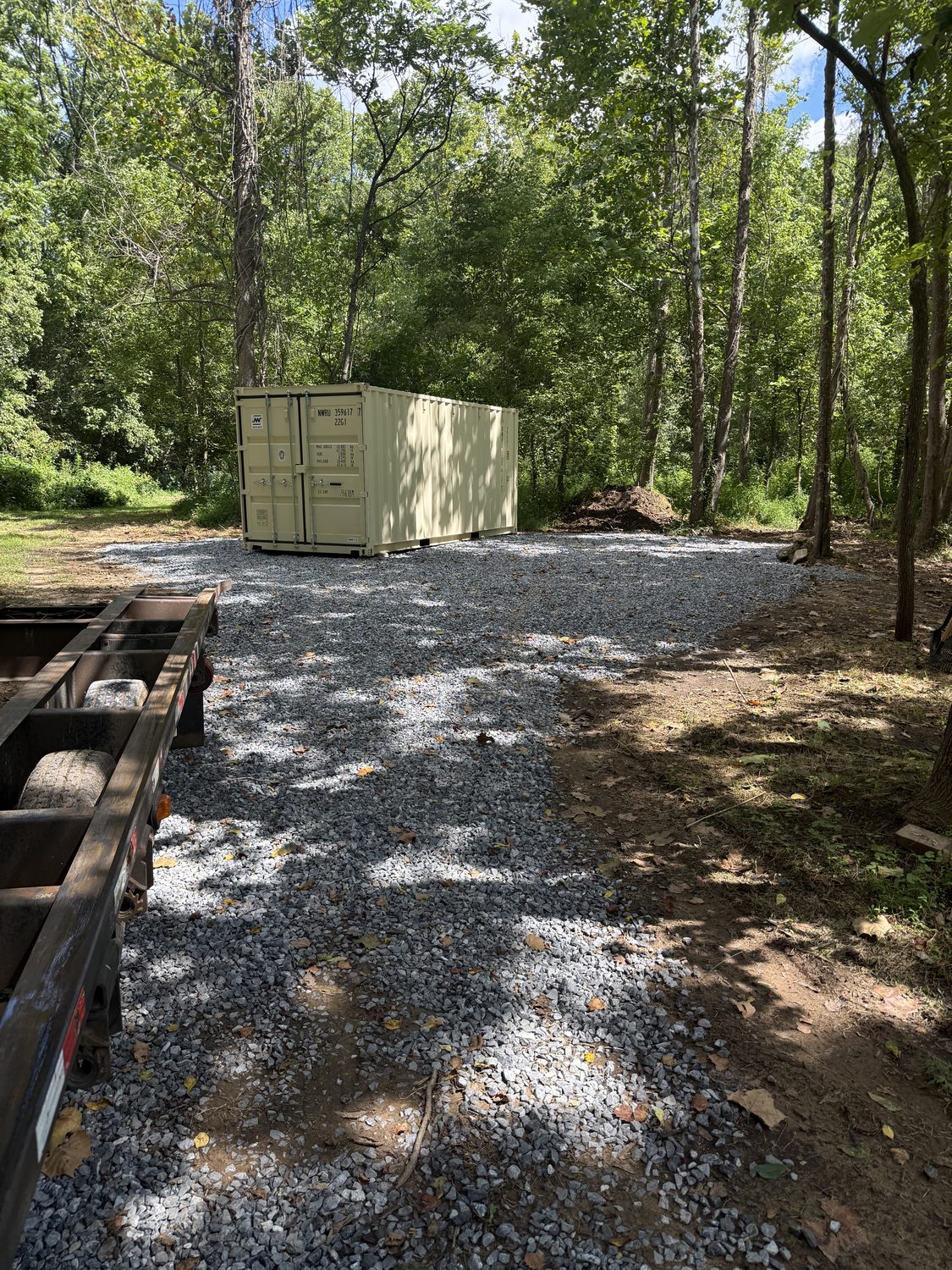
It's the first question almost everyone asks us: should I buy the container, or just rent one? The honest answer is that it comes down to a single thing, how long you'll actually need it. A few months on a job site is a very different decision than parking storage on your land for the next decade. Get the timeline right and the money usually answers itself.
Below we'll walk through when renting is the smarter move, when owning pays off, the rough point where the two cross over, and a rent-to-own path that lets you keep your options open. No pressure either way, we sell both, so we just want you in the right one.
When renting wins
Renting shines when your need is short-term or uncertain. You pay a flat monthly rate, the container shows up, and when you're done it goes back, no resale, no leftover steel sitting in the yard. If you can't say with confidence that you'll still want the box a year and a half from now, renting keeps you flexible and your cash in your pocket.
The classic cases where we steer folks toward renting:
- Job sites and construction. Lock up tools and materials for the length of the build, then send it back when you break ground on the next one.
- Renovations and remodels. Empty a room or a whole house into a dry, lockable box on the driveway while the work gets done.
- Seasonal crunches. Extra inventory at the holidays, equipment over the winter, a harvest that needs covered space, temporary needs that don't justify owning.
Our rentals start at $165/month with no contract, so you're never locked in. See terms and sizes on the container rentals page.
When buying wins
The math flips the moment the need becomes long-term or permanent. If the container is going to live on your property indefinitely, storing the farm's equipment, anchoring a workshop, holding overflow for a business that isn't going anywhere, every rent check you write is money you never get back. Buying turns that recurring bill into a one-time cost and leaves you with an asset.
And it's a durable one. A genuine ISO container is built from roughly 30-year Cor-Ten weathering steel with a welded lockbox, so it holds its value and shrugs off weather that would rot a wood shed in a fraction of the time. Buy once and it's yours: no monthly bill, no return date, and you can modify it, move it, or sell it down the road.
Used cargo-worthy units start at $3,200 delivered and leveled within 75 miles of Woodlawn. Compare sizes and grades on the container sales page.
The cost crossover
Here's where the decision stops being a guess. Renting is cheaper at first, a few hundred dollars instead of a few thousand. But rent is a meter that keeps running, and the purchase price is a one-time number. At some point the total rent you've paid catches up to what the box would have cost to own outright. Past that line, every additional month of renting is money you're spending instead of saving.
If you genuinely don't know how long you'll need it, that uncertainty is itself an argument for renting first, which leads straight into the next option.
The rent-to-own option
You don't always have to choose up front. With rent-to-own, you start month-to-month at $165 with no contract, use the container as long as you need it, and if it ends up staying put, we can apply part of what you've already paid toward buying it outright. It's the best of both worlds: the flexibility of renting while you figure out the timeline, with a path to ownership if the box becomes a fixture.
This is the move we recommend most often when someone is genuinely on the fence. You're never penalized for committing slowly, and you avoid the trap of renting for years past the crossover point without ever building toward owning the asset. Just tell us when you book that you're thinking rent-to-own and we'll set it up.
Example scenarios
A few common situations, and where the timeline points:
- A six-month kitchen remodel. You need a dry place for cabinets and furniture while the crew works. Half a year is well under the crossover, rent it, send it back when you're done.
- A general contractor with back-to-back builds. The container moves from site to site for years and never really goes idle. That's permanent use dressed up as temporary, buy it, and let it earn its keep across every job.
- A farm that needs equipment and feed storage "for now." "For now" on a working farm tends to mean forever. If you're honest that the box is staying, buy it, or start with rent-to-own if cash flow is tight this season.
- A retailer covering one big holiday season. Three or four months of overflow inventory, then back to normal. Clearly short-term, rent it, and rent again next year if the crunch repeats.
Still not sure which side of the line you're on? Tell us what the container is for and roughly how long you expect to keep it, and we'll give you a straight answer, plus a real number for both buying and renting so you can compare them side by side. Call (276) 237-6144 or request a quote and we'll lay it out for you the same day.