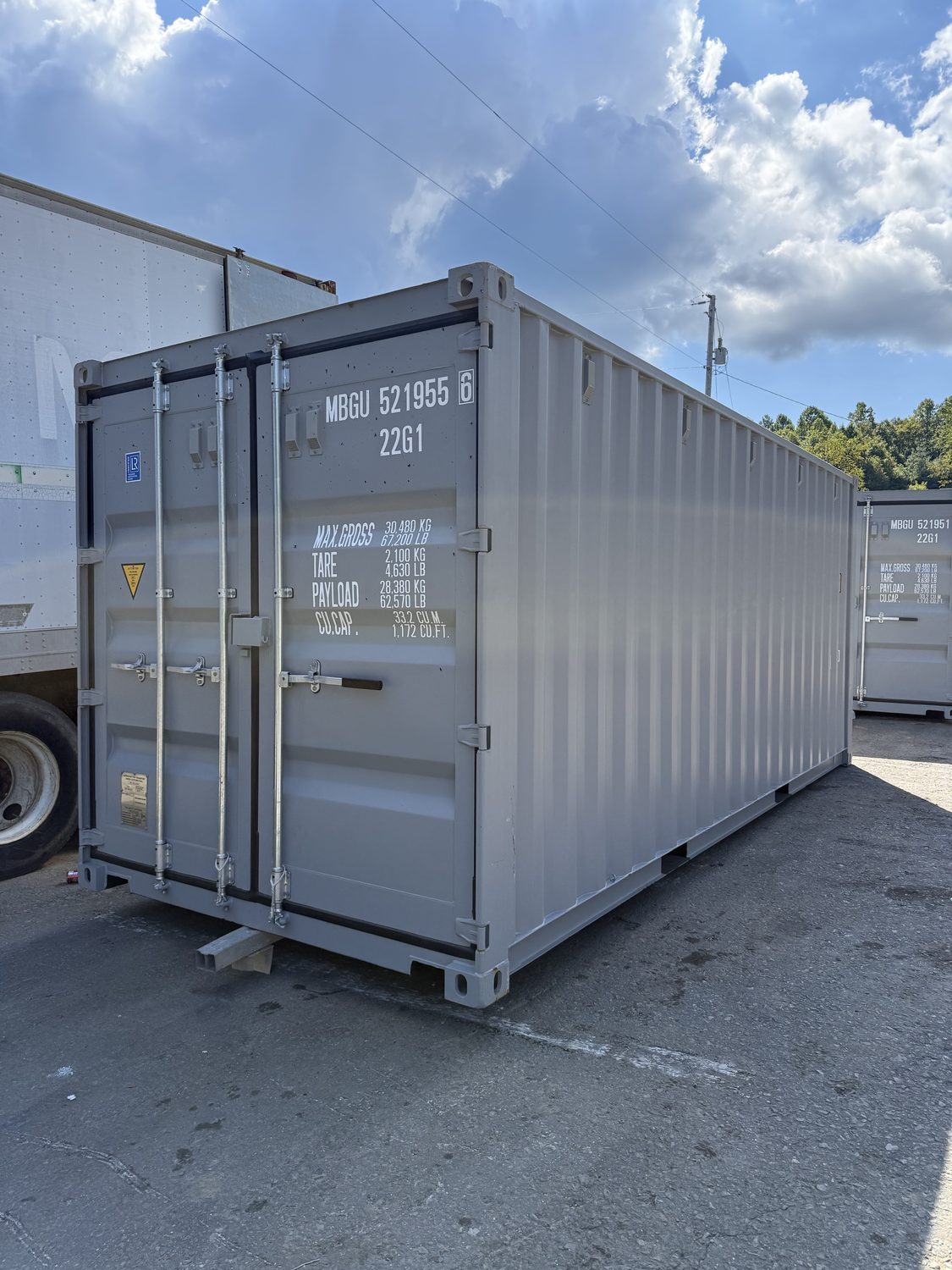
Three ways to add storage, a steel shipping container, a backyard shed, or a PODS-style portable unit. Here's a fair look at how they really compare on toughness, security, and what they cost you over the years.
If you've run out of room, for tools, inventory, farm gear, or a houseful of stuff during a move, you've probably landed on the same three choices everyone does: buy a shipping container, put up a shed, or rent a portable PODS-style unit. They all hold your things. They are not remotely the same once you look past the first month. Here's the honest version, where the container clearly wins and where it honestly doesn't.
Durability: steel vs wood & light metal
This is the gap that matters most, and it isn't close. A real ISO shipping container is welded from 14-gauge Cor-Ten weathering steel, the same boxes that ride ocean freighters through salt spray and stacking loads for years. The walls don't flex, the roof doesn't sag, and the floor is built to carry a forklift.
A wood shed is a different animal. It looks tidy the year you build it, but the framing eventually warps, the siding soaks up moisture, and the bottom plate rots where it meets the ground. Light-metal sheds skip the rot but trade it for thin panels that dent, rattle in wind, and rust through at the seams. A PODS-style box is sturdier than a shed but is built to be light enough to truck around constantly, it's a temporary container, not a 30-year structure.
Bottom line: for raw toughness, a steel container is in a class of its own. It's the only one of the three engineered to survive decades outdoors taking abuse.
Security: welded lockbox vs hasp & latch
Storage you can't secure isn't really storage. A shed usually closes with a screwed-on hasp and a padlock, and a screwed-on hasp comes off with the same screwdriver that put it on, or a quick pry bar. PODS units lock, but you're trusting a latch on a unit that's designed for easy access during a move.
Every container we sell comes with a welded steel lockbox, a steel shroud bolted around the padlock so bolt cutters and pry bars can't reach it. Combine that with cargo doors that seat into a heavy steel frame, and you've got the hardest target on the property. For tools, equipment, and anything a thief would love to walk off with, that difference is the whole point.
Cost over time: own it vs pay monthly
Here's where the sticker price lies to you. A shed and a container both cost real money up front. A PODS-style unit feels cheap, until you realize the meter never stops.
Shipping container: a one-time buy. Used cargo-worthy units start at $3,200 for a 20-ft and $4,900 for a 40-ft, delivered free within 75 miles. After that you owe nothing.
PODS-style rental: a monthly fee that runs forever, plus delivery and pickup charges. Convenient short-term, expensive long-term.
Shed: a one-time cost too, but you're paying for something with a shorter life and far less security per dollar.
Do the math on a PODS-style unit you keep for a year or two and you'll often spend more in monthly fees than a container costs to buy outright, and at the end you own nothing. If you only need storage for a few months, renting still makes sense; once you cross past roughly half a year, owning a container is the cheaper road. (We break the rent-or-buy line down further in our buy vs rent guide.)
Longevity & resale value
A container is one of the very few storage options that holds its value. Cared for or not, a steel box keeps its bones and stays in demand, if your needs change in five years, you can sell it or move it to another property. A shed depreciates with every season of weather and is effectively worthless once it starts to fail; you can't load it on a truck and resell it. A PODS-style unit was never yours to keep, so there's nothing to resell at all.
That resale floor is a quiet but real reason owning a container beats the alternatives over the long haul, your money goes into an asset, not a recurring bill or a structure on its way to the dump.
Weather resistance
Storms test storage harder than anything. A genuine container is wind and water tight by design, sealed cargo doors, a watertight roof, and steel walls that don't care about driving rain, summer heat, or a hard freeze. That's why containers are a go-to for emergency and recovery storage after bad weather.
Sheds fare worst here: wind lifts roof panels, water finds its way through seams and warped trim, and snow load can crush a light frame. PODS-style units handle rain and routine weather fine for short stays but aren't built to ride out years of seasons sitting in one spot.
To be fair to the alternatives: a shed can simply look nicer in a backyard, is easier to insulate, wire, and finish into a tidy workshop, and may sit better with an HOA. And PODS is genuinely convenient for a short cross-country move where the company hauls the unit to your new city and you never want to own a box afterward. Those are real wins, they're just not durability, security, or long-term value.
Weigh it all together and the verdict is clear: when you need storage that survives the weather, locks down tight, and pays for itself instead of bleeding a monthly fee, a steel container wins on durability, security, and long-term value. If that's you, our container sales page has the sizes, grades, and delivered pricing to compare, and a real person on the phone to help you pick.
Common questions
Quick answers.
For durability and security, yes. A shipping container is welded from ~30-year Cor-Ten steel and shrugs off weather that warps wood and rusts thin metal sheds, and it secures with a welded lockbox instead of a screwed-on hasp. A shed can look nicer in a backyard and is easier to insulate and finish, so if appearance and a workshop feel matter more than toughness, a shed may suit you. For weatherproof, theft-resistant storage that lasts decades, the container wins.
Over time, owning a container is almost always cheaper. PODS and similar services charge a monthly fee that never stops, plus delivery and pickup. A used cargo-worthy 20-ft container starts around $3,200 delivered and is yours to keep, so once you are storing things for more than several months the math favors owning. PODS still makes sense for a short, convenient cross-country move where you do not want to keep a box afterward.
Not the way a wood or light-metal shed does. Containers are built from 14-gauge weathering (Cor-Ten) steel designed for years at sea, and every unit we sell is wind and water tight. You may see honest surface rust on a used unit, but it stays dry inside and routinely lasts 25 to 30 years outdoors with no maintenance, far longer than a typical shed.