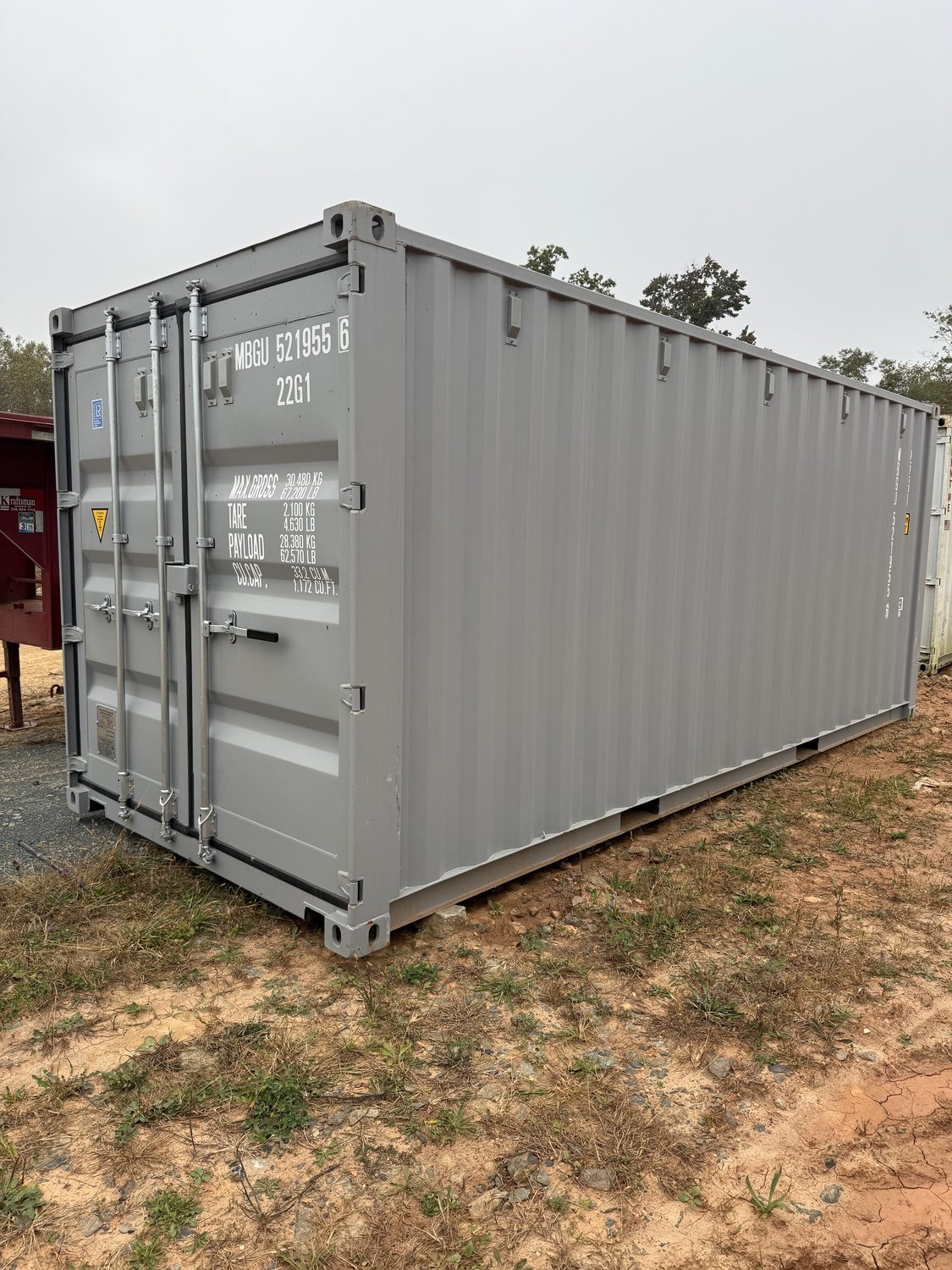
"Container rain" is condensation. Warm, humid air trapped inside the box rises until it touches the steel ceiling; overnight the steel cools faster than the air, moisture condenses on the cold metal, and by morning it's dripping back down on your stored goods like indoor drizzle. The fix isn't one gadget, it's controlling moisture at the source and giving the air a way to move, starting with the free steps before you spend a dime on hardware.
One thing to clear up first: a wind and water tight container is doing its job even while it sweats. WWT means outside weather can't get in. Container rain is moisture you sealed in, damp cargo, wet ground under the box, or plain humid summer air on loading day. That's good news, because it means the cure is entirely in your hands, and most of it costs almost nothing.
Why containers sweat
Steel is honest about temperature, it tracks the outside air almost instantly. On a warm, muggy day the air inside the container loads up with moisture. When night drops the temperature, the roof and ceiling chill first, and once that steel falls below the dew point of the air inside, water has to come out of the air and onto the metal. The ceiling is the coldest surface in the box, so that's where the beads form. Gravity does the rest.
The moisture itself always hitched a ride in. The usual suspects: cardboard that spent a season in a garage, firewood that isn't fully seasoned, equipment washed the day before loading, furniture out of a damp basement, or ground moisture rising under a box parked on bare dirt. Even opening the doors on a humid afternoon swaps the whole air volume for a fresh, wet batch.
How do you know it's condensation and not a leak? Pattern. Condensation shows up as an even sweat across the whole ceiling, often with a freckling of tiny rust spots over time, and it follows clear, cold nights. A leak leaves one wet trail below one point, and it follows rain. If you're seeing the second pattern, stop reading this guide and go find the pinhole.
The Blue Ridge factor
Our corner of Virginia, West Virginia, and North Carolina is practically engineered for container rain. Summers run humid, and mountain evenings cool off fast, big day-night temperature swings are exactly the recipe, because the steel dives below the dew point night after night. Spring and fall are the worst offenders: warm, damp afternoons followed by cold, clear nights when the roof radiates its heat straight to the sky.
None of this is a defect in the container. Every steel building in these hills, barns, carports, machine sheds, sweats under the same conditions. The difference is that a container seals tight, so whatever moisture you load in has nowhere to go unless you plan for it.
Fix the cheap stuff first
Most condensation problems are solved before the doors ever close. In order of cost:
- Load only dry goods. No green firewood, damp tarps, or cardboard that spent the summer in a basement. Let power-washed equipment dry in the sun for a day before it goes in.
- Get everything off the floor. Set contents on pallets with air gaps between them, so air can circulate underneath and floor-level moisture has nothing to wick into.
- Leave breathing room. Keep a gap between your stack and the walls, and don't pack tight to the ceiling. Air that can move is air that can dry.
- Park the box on dry ground. A container sitting over damp soil lives in a humidity bath from below. Good drainage under the box matters as much as anything you do inside it.
Desiccants and vents
For sealed, short-term storage, a gap between houses, a winter layover, documents between offices, desiccants are cheap insurance. Moisture-absorber buckets or hanging packs pull water out of the trapped air and hold it, and you swap them when they're full. They're ideal if you're renting a container for a few months, because they need no modification to the box at all.
For long-term storage, passive vents are the workhorse. Louvered vents let the air inside track the air outside, so humidity never gets trapped against a cooling ceiling, they cut condensation and heat while keeping rain and pests out. Our fab shop installs vents, and every other airflow upgrade, through our custom modifications service on any box we sell or rent.
Insulation for working spaces
If people will spend time in the box, a shop bench, a desk, anything you'll heat or cool, move up to insulation. Spray foam or rigid panel insulation, finished over, keeps the interior steel surface close to the inside air temperature, so moist air never finds a surface cold enough to condense on. It's the same reason a drywalled house doesn't rain indoors.
Insulation is overkill for plain storage, but for a container workshop it pays for itself in comfort alone: cooler summers, warmer winters, no drips on the toolbox. Pair it with a vent or two and the interior stays stable all year.
Drainage, and the stuff that molds first
The ground under the container matters more than most people expect. A box parked over pooling water takes on moisture from below around the clock: the steel crossmembers rust from underneath, the floor wicks humidity upward, and the air inside never really dries out. A crowned gravel pad with blocks under the corners keeps air moving beneath the box and sends water away, our container foundation guide covers how to set that up right.
Second, know what molds first: upholstered furniture, mattresses, paper and photographs, fabric, and feed. If you're storing any of those, treat pallets and desiccants as the minimum and add vents for anything spanning a season. A few habits go a long way, too: drape furniture in breathable sheets instead of plastic wrap that traps moisture against the fabric, keep documents in sealed totes with a desiccant pack inside each one, and get feed into lidded barrels so bag paper never sits against steel or floor.
Then check on the box after the big spring and fall swings, that's when container rain does its work, and a five-minute look catches trouble while it's still a wipe-down instead of a loss. Not sure what your load needs? Call us at (276) 237-6144 and we'll talk it through before the box ever ships.