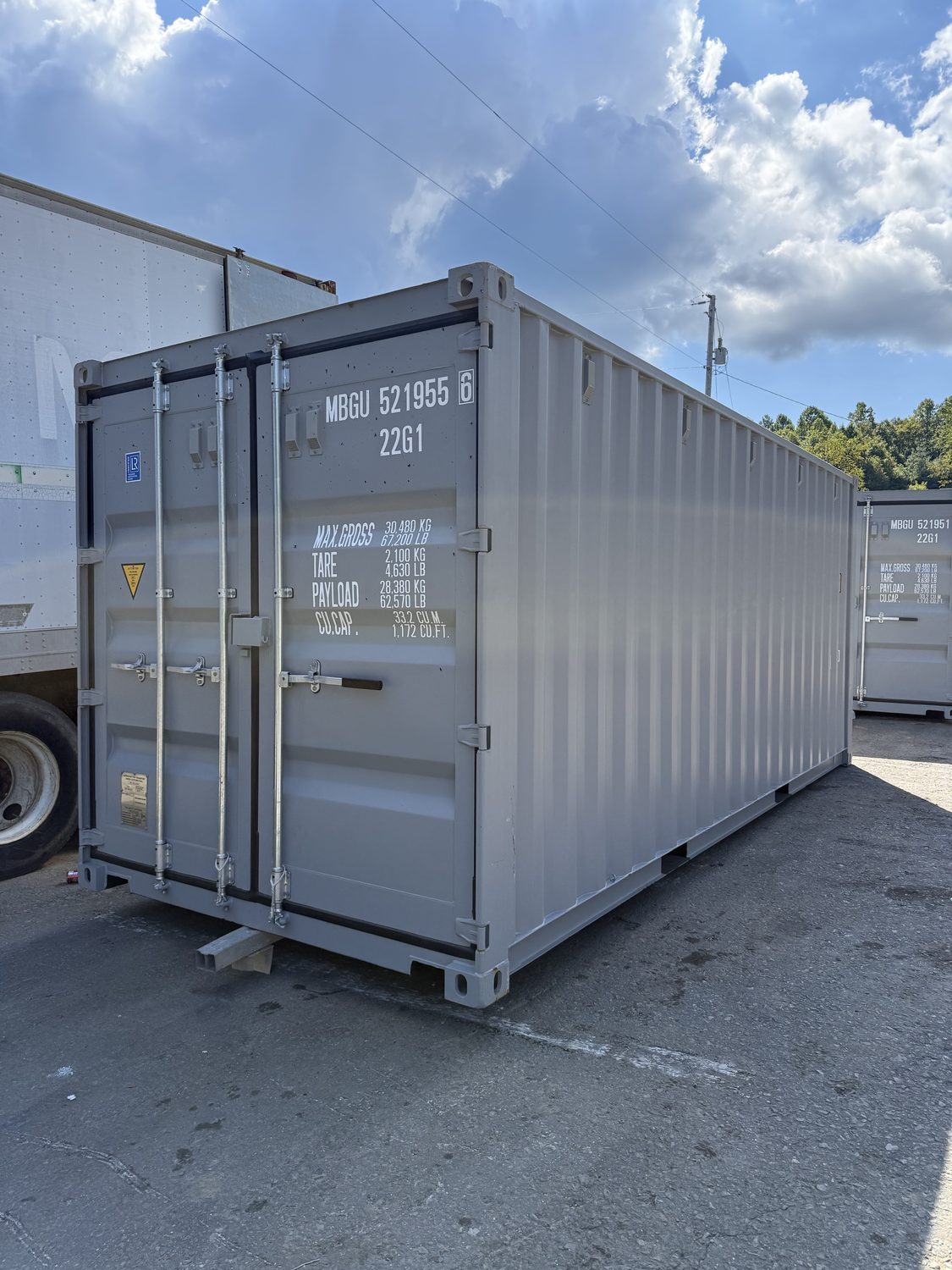
Container grades describe condition, not size, and for most buyers, only two of them matter. A one-trip container was shipped once from the overseas factory and is the closest thing to new you can buy: factory paint, tight seals, one ocean crossing on the clock. A cargo-worthy (CW) container is a used box that's still certified structurally sound, honest surface rust and scuffs on the outside, no holes, doors that seal.
Below those two sit wind and water tight (WWT), which promises a dry box but carries no shipping certification, and as-is, which we'd steer you away from for storage altogether. Here's what each label really means, which grade fits which job, and how to make sure the name on the listing matches the box that lands in your yard.
The grade ladder at a glance
Every genuine ISO container comes from the same recipe: 14-gauge Cor-Ten weathering steel over a marine-plywood floor, engineered to cross oceans for decades and last roughly 30 years sitting outdoors. Grades don't change the recipe. They describe how much service a box has seen and what shape the paint, floor, doors, and seals are in today. That's worth repeating, because it's the biggest misconception we hear at the yard: a cheaper grade is not a weaker container. It's the same box, further along in its working life.
From newest to roughest, the ladder runs like this:
- One-trip, one ocean voyage, nearly new. The premium grade, and the cleanest look money buys short of factory-fresh.
- Cargo-worthy (CW), used, still certified structurally sound enough to ship freight. Honest wear, full strength.
- Wind and water tight (WWT), no leaks, dry inside, but not certified for another voyage.
- As-is, sold with known problems. A parts box, not a storage box.
One-trip: shipped once, closest to new
A one-trip container is built overseas, loaded with cargo, and sailed across the ocean a single time, then sold here instead of going back into the worldwide shipping rotation. That single voyage is all the wear it has ever seen, so it arrives looking nearly the way it rolled off the line: crisp factory paint, intact decals, fresh rubber door gaskets, and a clean marine-plywood floor. See what we stock on our one-trip containers page.
What the premium buys is appearance and seal condition, not extra strength or extra years. That makes one-trip the right base when the container will be seen or lived in: a storefront, an office, a finished build-out beside the house. It's also the cleanest canvas if you're planning custom modifications, since smooth, rust-free walls cut cleaner for doors, windows, and paint.
Cargo-worthy, WWT, and as-is
Cargo-worthy means the box is still certified sound enough to ship freight across an ocean: solid walls and floor, square structure, doors that close and seal. WWT promises exactly what the name says, wind and water stay out, the inside stays dry, without the shipping certification behind it. Every cargo-worthy box is wind and water tight; not every WWT box is cargo-worthy. For storage on your land the two do the same daily job, which is why we group our used / cargo-worthy inventory together and guarantee it dry either way.
Honest wear on a used box looks like surface rust, faded paint, and the odd dent or scuff, cosmetic, not structural. What it should never include: holes, soft spots in the floor, or patched-over rot. A container with those problems is as-is, the bottom rung of the ladder. As-is boxes have their place as donor steel for a welding project, but they're the wrong buy for anything you want kept dry, and they're a grade we simply don't sell.
Which grade fits which job
Every grade we sell keeps your stuff just as dry, so this decision is about finish, placement, and resale, not about whether the box works. Match the grade to where the container will sit and what it has to do:
- Long-term home or farm storage: cargo-worthy. Same steel, same roughly 30-year life, lowest price, and the weathered look disappears behind the barn anyway.
- Job sites: cargo-worthy again, or skip buying entirely and rent one month-to-month from $165 on our container rentals page while the project runs.
- Offices, storefronts, and build-outs: one-trip. When people see the box every day, the factory finish and fresh seals earn their premium.
- Thinking about resale someday: condition carries value. A one-trip holds its looks, and a certified cargo-worthy box is an easier sell than a WWT-only unit.
Trust, but verify the label
Here's the uncomfortable truth about grade names: nobody polices them in a marketplace listing. Certification surveys are real things in the shipping world, but the words cargo-worthy and one-trip cost nothing to type, and sight-unseen sellers lean on them hard. A box described as CW in a three-year-old stock photo can arrive with a rotted floor and daylight through the roof, if it arrives at all. It's not that every online seller is crooked, because most aren't. It's that honest dealers and scammers use the exact same vocabulary, so the words alone can't protect you.
The fix is simple: look at the actual container before money changes hands. Ask for dated photos of the exact unit, check that the doors swing and seal, and stand inside with the doors shut to look for daylight. Our used container inspection checklist walks through the whole routine. Or skip the guesswork entirely, walk our yard at 5567 Elk Horn Rd in Woodlawn or the sales lot on E Lee Highway in Wytheville, and pick the exact box that goes on the truck.
What each grade costs
Used cargo-worthy is the budget anchor: 20-ft units start at $3,200, delivered and leveled free within 75 miles of Woodlawn with a welded lockbox included. A one-trip typically runs several hundred to a couple thousand dollars more than a used box of the same size. Since both grades carry the same roughly 30-year lifespan, that gap is the price of appearance and fresh seals, nothing more.
So pay it when looks matter, and pocket it when they don't. Tell us where the container is going and we'll quote both grades side by side the same day, see our 2026 price guide for the full breakdown, or call (276) 237-6144 Monday through Friday, 8 a.m. to 5 p.m. ET, and we'll give it to you straight.