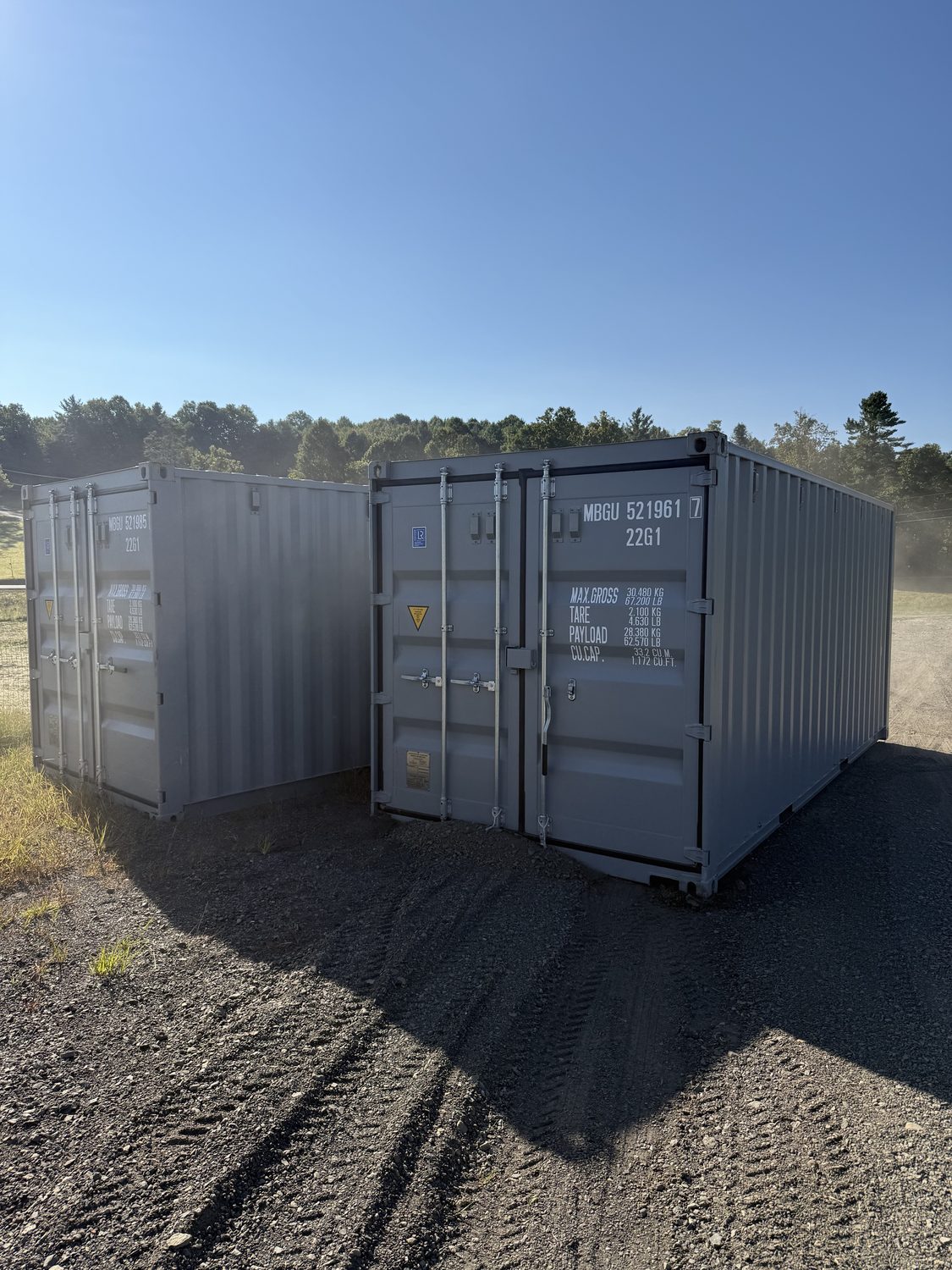
What is a container office? It's a steel jobsite office built from a 20 or 40-ft shipping container, insulated, wired, climate-controlled, and finished inside, that arrives on one truck and is set, leveled, and ready for hookup the same trip. It does everything an office trailer does, except it's built from 14-gauge Cor-Ten steel instead of thin aluminum, so it shrugs off weather, pry bars, and years of moving from job to job.
We build and deliver them from our yard in Woodlawn, rent or buy, and this guide covers the practical questions: the layouts that work, what's actually included in the buildout, what drives the cost, how to prep the site, and how fast you can realistically be working out of one.
Office, or office plus storage?
The first decision is the floor plan, and three layouts cover almost every crew. A 20-ft single office is one open room of about 160 square feet, a desk, file storage, and a small crew table, right-sized for a foreman running a single site. The 40-ft office-and-storage combo is the one most crews pick: a finished, climate-controlled plan room up front and a locked storage end out back, so paperwork and power tools live behind one steel wall instead of in two separate boxes. And a 40-ft multi-room splits into a private office plus a separate meeting room for sit-downs with clients, subs, and inspectors, with the partition and door layout built to spec.
All three are laid out in detail on our mobile offices page, and our shop can adjust any of them, an extra door, a different partition, your paint and signage, through custom modifications.
What the buildout includes
A container office leaves our yard finished, not as a bare box with promises. The standard buildout includes:
- HVAC that heats and cools, comfortable through a Blue Ridge winter and a humid summer.
- Insulated walls and ceiling so the steel holds temperature and the unit runs efficiently.
- Wired electrical, a breaker panel, wall outlets, and switches, ready for your electrician to tie in.
- LED lighting overhead, bright, low-draw, and even across the whole office.
- A personnel door and lockable windows for daylight, ventilation, and a clean exit.
- A finished interior, flooring underfoot and clean wall panels, not exposed corrugated steel.
Two options worth knowing about: a restroom or small wet space with a sink, where your site's water and drainage allow, and network-and-phone readiness, pre-run conduit and pass-throughs so data and comms drop in cleanly. Both get built into the unit before it ships, not bolted on later.
What a container office costs
Every container office is really two numbers: the shell and the buildout. The shell follows normal container pricing, size and condition drive it, and our container price guide covers that landscape. The buildout scales with what you add: a single-room office with the standard package costs less than a multi-room unit with a wet space, and we itemize every line in a written quote so you can see exactly where the money goes before you commit.
Then there's the rent-or-buy question, and it works the same way it does for storage boxes. Renting is month-to-month with no long-term contract, the right call for a job that lasts a season or two. Buying wins when the office will move with the company from site to site for years. The steps of buying a mobile office outright have a page of their own.
Site prep and power hookup
A container office needs two things from your site: a spot and a feed. The spot is a firm, reasonably level patch with clear truck access, our tilt-bed backs in, slides the office onto foundation blocks, and levels it, and the visit is covered by free delivery within 75 miles of Woodlawn. Our delivery preparation guide shows exactly what the driver needs to see in a photo before we schedule the drop.
The feed is power. The office's breaker panel is run to an exterior connection, so a licensed electrician can tie it into whatever your site has, a temporary pole, a generator, or a building feed. Tell us your power setup when you order and we'll spec the panel to match, so hookup day is measured in hours, not days. And if the office is sharing the site with a plain storage box, say so, we can often set both on the same delivery, so your whole jobsite footprint shows up in one trip.
Container office vs. office trailer
The office trailer is the incumbent, and its weaknesses show up fast on rural sites. It's thin aluminum on a fragile frame, it dents, it leaks, and a determined pry bar opens it in seconds. On a Blue Ridge jobsite that sits empty every night and all weekend, that's how you end up with the Monday-morning phone call about the door hanging open and the laptops gone.
A container office is the same steel we deliver for jobsite storage: 14-gauge Cor-Ten walls, welded corners, and real locks. It doesn't flex going down the highway, it doesn't leak at the seams, and when the job wraps it hasn't turned to scrap, it moves to the next site or sells on, because a steel box holds its value the way trailers never do. There's a quieter difference too: a trailer ages out from under you, floors soften, skins dent, seals fail, while the container is still the same box in year ten that it was on delivery day.
How fast you'll be working
Here's the honest timeline. Quoting is same-day. If a unit configured the way you need is ready in the yard, delivery follows quickly, and setup is a single trip, with the office set, leveled, and ready for your electrician the day it lands. Once power is tied in, you move in the desks and you're working. There's no framing, no drywall, no on-site build-out to wait through.
A custom buildout, a specific partition plan, a wet space, your colors and logo, takes fab-shop time first, usually measured in weeks rather than months, and we put a real date on it in the written quote before any work starts. Either way, call (276) 237-6144 with your headcount and your site, and we'll tell you plainly which path you're on and when you can be behind the desk.