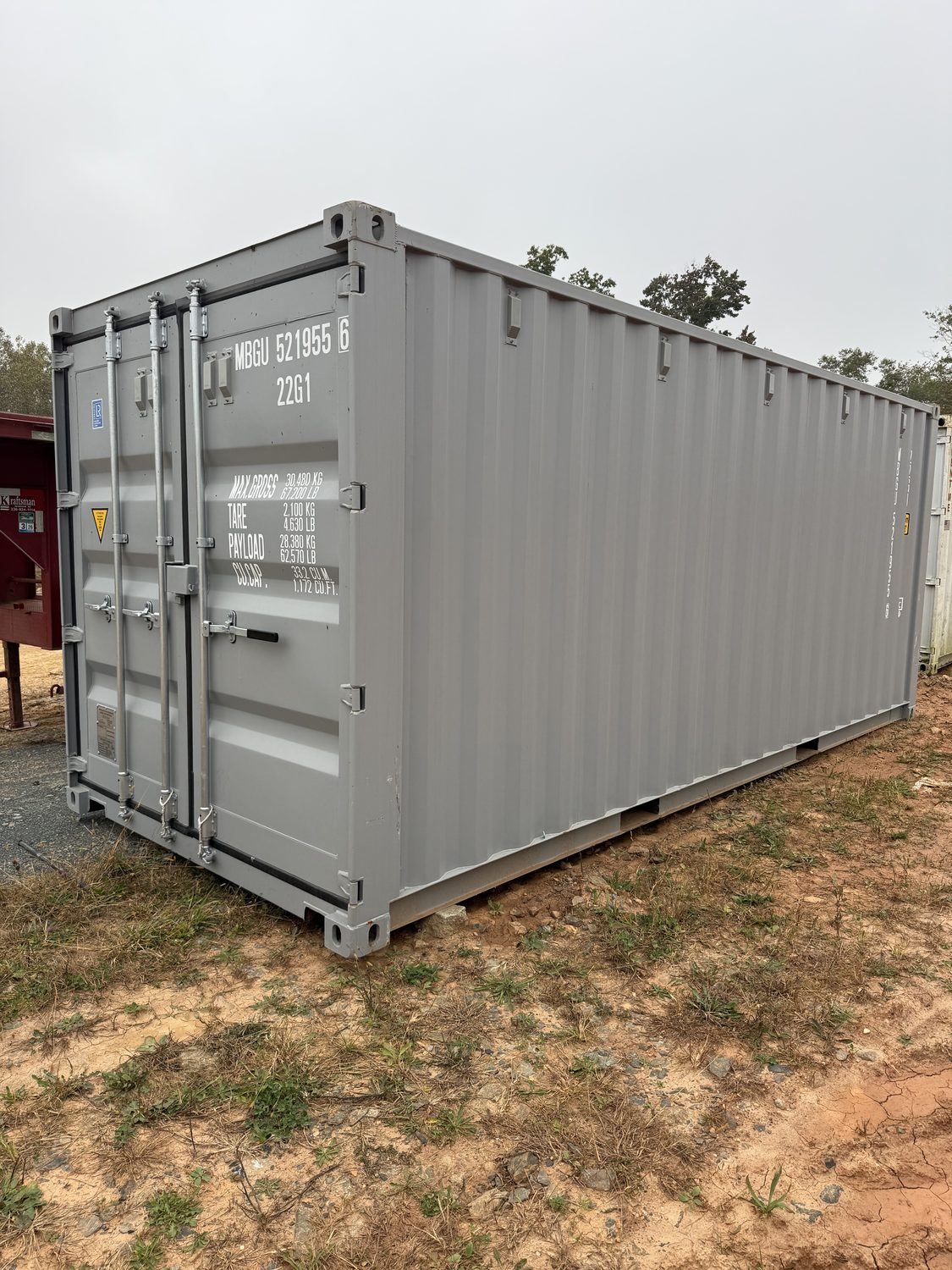
How do you secure a shipping container? Start with the good news: the container itself is already the hardest thing on your site to break into. The walls, roof, and doors are corrugated Cor-Ten steel, nobody is getting through them with hand tools in the dark. The weak point is the padlock hanging on the doors, which means the two decisions that matter most are the lockbox that shields that padlock and the lock you put inside it.
Get those two right, add a little thought about where the doors face and who holds the keys, and a container becomes the storage a thief walks past in favor of an easier target. Here's how we set up every box we deliver, and the habits we've watched keep tools on jobsites across Virginia, West Virginia, and North Carolina.
Start with the steel
A genuine ISO container is 14-gauge Cor-Ten steel on every side, with a solid floor underneath and cargo doors that lock from a single point you control. Compare that to the usual jobsite options, a job trailer with thin walls, a gang box two people can carry off, a chain-link gate, and the container wins before you've spent a single extra dollar. That's exactly why crews park one on the pad for construction site storage: the box itself is the deterrent.
Thieves are economists. They take the easiest thing on the property, and on most sites that's whatever sits in the open or hangs behind a padlock they can reach with bolt cutters. Your whole security job is making sure the container never offers them that padlock, and, if you're buying a used unit, making sure the door hardware is sound to begin with. Our used container inspection checklist covers what to check on the doors, hinges, and locking bars before you hand over money.
Why the lockbox matters
A lockbox is a steel shroud welded over the spot where your padlock hangs. The lock sits up inside it, with just enough room for your hand and the key. Bolt cutters become useless, because there's nothing exposed to grab, the jaws physically can't reach the shackle. A grinder fares little better: there's no room to get a wheel onto the lock at a working angle, so a quick, quiet thirty-second attack turns into a long, loud, sparks-flying project no thief wants any part of at two in the morning.
That's why we treat the lockbox as standard equipment rather than an upgrade, every container we deliver, sale or rental, ships with a welded lockbox. If you already own a container without one, it's a simple weld that instantly removes the easiest attack there is, and it's the single best security dollar you can spend on a steel box.
Choosing the right lock
The lockbox protects the lock, but the lock still has to do its job. Skip the bargain-bin hardware-store padlock, thin shackles and stamped bodies give up quickly, and a cheap lock wastes a good lockbox. What you want is a lock built for exactly this situation:
- Puck locks. Round, flat, and shackle-free, the locking bolt hides entirely behind the steel body, so there's nothing to cut and almost nothing to grab.
- Shrouded-shackle padlocks. A hardened padlock with raised shoulders that bury the shackle, leaving only a sliver exposed inside the lockbox.
- Hardened, heavy bodies. Whatever the style, look for hardened steel and real weight in your hand. This is not the place to save ten dollars.
One good lock inside a welded lockbox will outlast the container's paint. Buy it once, keep a spare key somewhere that isn't the jobsite, and stop thinking about it.
Where to point the doors
Security is also about where the box sits. When we deliver, we set the container with the doors facing wherever you want, so choose on purpose. Point them toward the lit, visible side of the property: the house, the site entrance, the road, the yard light. Someone working on a lock wants privacy, and doors facing the tree line at the dark back corner of the lot hand it to them.
Leave yourself working room in front of the doors, they swing wide, and you'll be carrying things in and out, but don't create hiding room. A container tucked tight against a hedge or between stacked materials gives someone cover to work unseen. Open ground on the door side, visible from where people actually are, is the free security upgrade most folks never think about.
Jobsite lock-up discipline
Most jobsite losses aren't dramatic break-ins, they're an unlocked box, a borrowed key, or a door left swinging during a busy week. The fixes cost nothing:
- Close it every night. Even when the crew is back at 7 a.m. An open container after dark is an invitation with a spotlight on it.
- Control the keys. Don't leave a key in the gang box, the truck console, or on a nail inside the container. Two keys, two named people, period.
- Use a sign-out habit. If a tool leaves the box, somebody's name goes next to it. Shrinkage stops when gear stops being anonymous.
- Make the last one out the lock man. One person owns the final walk-around and the click of the padlock, so it never becomes everybody's job and nobody's.
None of that is glamorous, and that's the point. The container already removes the skill from the thief's side of the equation, discipline removes the luck. The crews that never lose tools aren't the ones with the most cameras; they're the ones where the box is shut, locked, and boring every single night, holidays included.
Mods that raise the bar
For most storage, a lockbox, a good lock, and smart placement are all you'll ever need. If the container holds serious value, copper wire, crates of power tools, machines you can't replace by Friday, our shop can take it further with custom modifications: exterior lights by the doors, camera-ready mounts tied into an electrical package, extra hasps for a second lock, or a steel man door with a keyed deadbolt so daily traffic doesn't run through the cargo doors at all.
And if you're renting rather than buying, nothing changes. Our rental containers are the same steel with the same welded lockbox included, from $165 a month with no contract. Tell us what you're protecting and we'll set the box up right, call (276) 237-6144 and we'll talk it through.