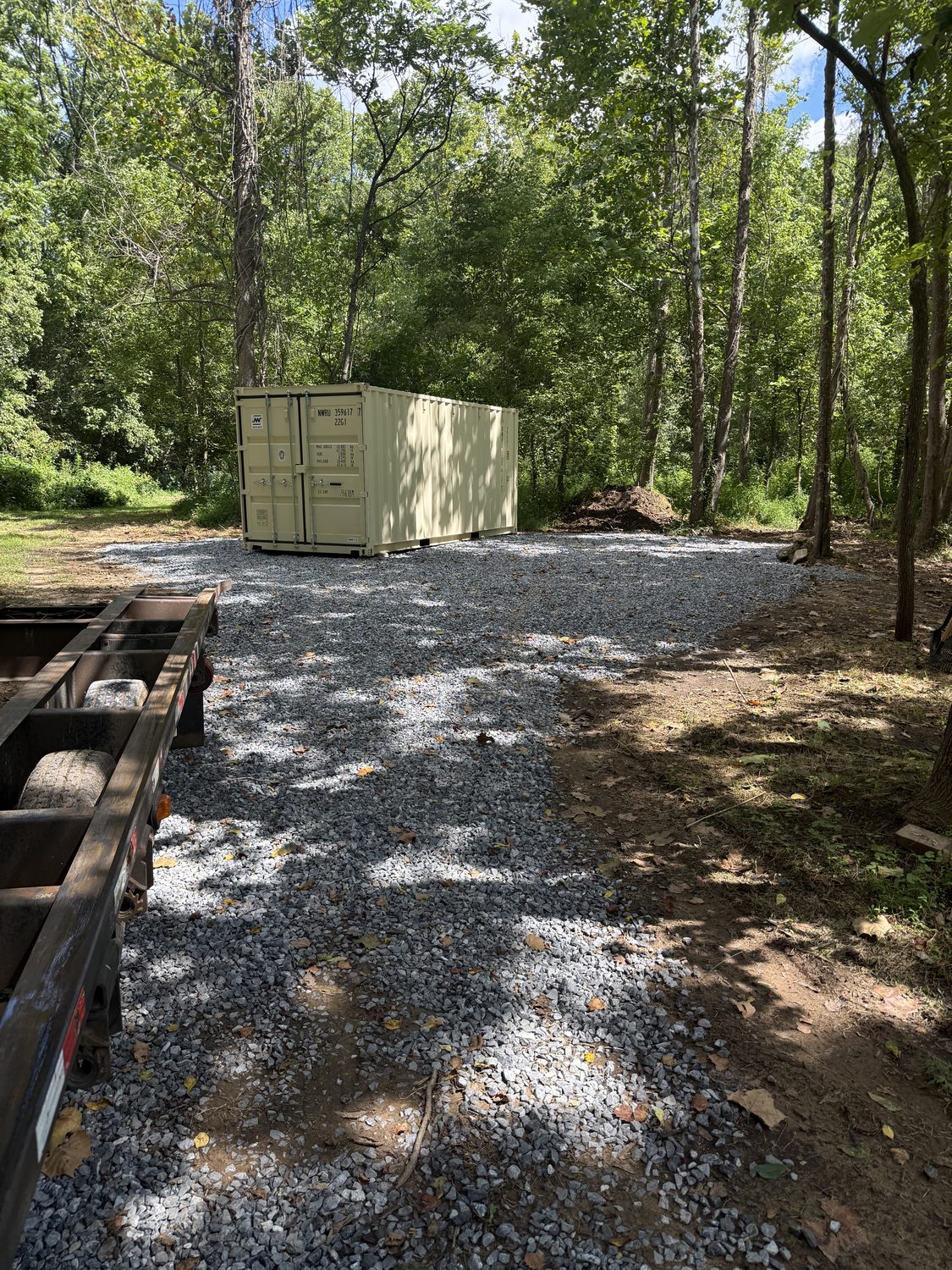
A 20-ft or 40-ft ISO container, bought or rented, set level on your ground with the lockbox welded on. It is about 60 road miles out US-58 from the Woodlawn yard to Martinsville, so the delivery is free.
Martinsville is about 60 road miles from our yard on Elk Horn Rd in Woodlawn, and it is the same road the whole way. US-58 east, out through Stuart at roughly the 30 mile mark, then another half hour past it. Sixty miles sits well inside the 75 road miles where our delivery and leveling cost you nothing, so none of that drive turns into a line on your invoice.
We sell 20-ft and 40-ft ISO containers, rent the same units month to month, and cut and weld them into something else when the job calls for it. All of it starts on gravel in Woodlawn, where a person can walk up to a box, swing the doors and say honestly what the floor and the seals look like. Most of what a container search turns up around here is a broker reselling a listing.
Two things are worth settling before you order into Martinsville. The first is whose zoning desk you belong to, because the city stands on its own. The second is the approach: how a tilt-bed truck reaches your spot, and which way you want the doors pointing when it drives off. Both are phone calls, and both are cheaper to settle now than on delivery morning.
Martinsville is an independent city. In Virginia that is a legal fact, not a figure of speech: the city is not governed by a county, and its own ordinance applies to a container sitting inside the city limits. The land wrapped around it is in the Henry County area, which is where the mix-up starts.
So the first question is not what the rule says. It is whose rule you are reading. Pull up your address and work out whether it falls inside the city limits or outside them. Inside, the city is your zoning office. Outside, you are on county ground and the county is. People get this backwards more often than you would expect.
Once you know who to ask, here is what you are asking about. Virginia's statewide building code does not treat a storage container as a building, so a box holding tools, stock, records, feed or furniture is exempt from the building code side of things. That holds here the same as anywhere else in the commonwealth, and it is why most people buying a container in Virginia never chase a building permit.
Zoning is the piece that shifts from one place to the next, and no website can answer it for you. A local ordinance decides whether the box is allowed on your parcel, how far off a property line it sits, whether it has to be screened from the street, and how long it may stay. Insulate it, run power to it and put people to work inside, and you have stopped storing and started occupying, which is a different section of the code.
Our permit and zoning guide sets out how Virginia, North Carolina and West Virginia each handle this. It will not hand you the Martinsville answer, but it will tell you exactly what to ask.
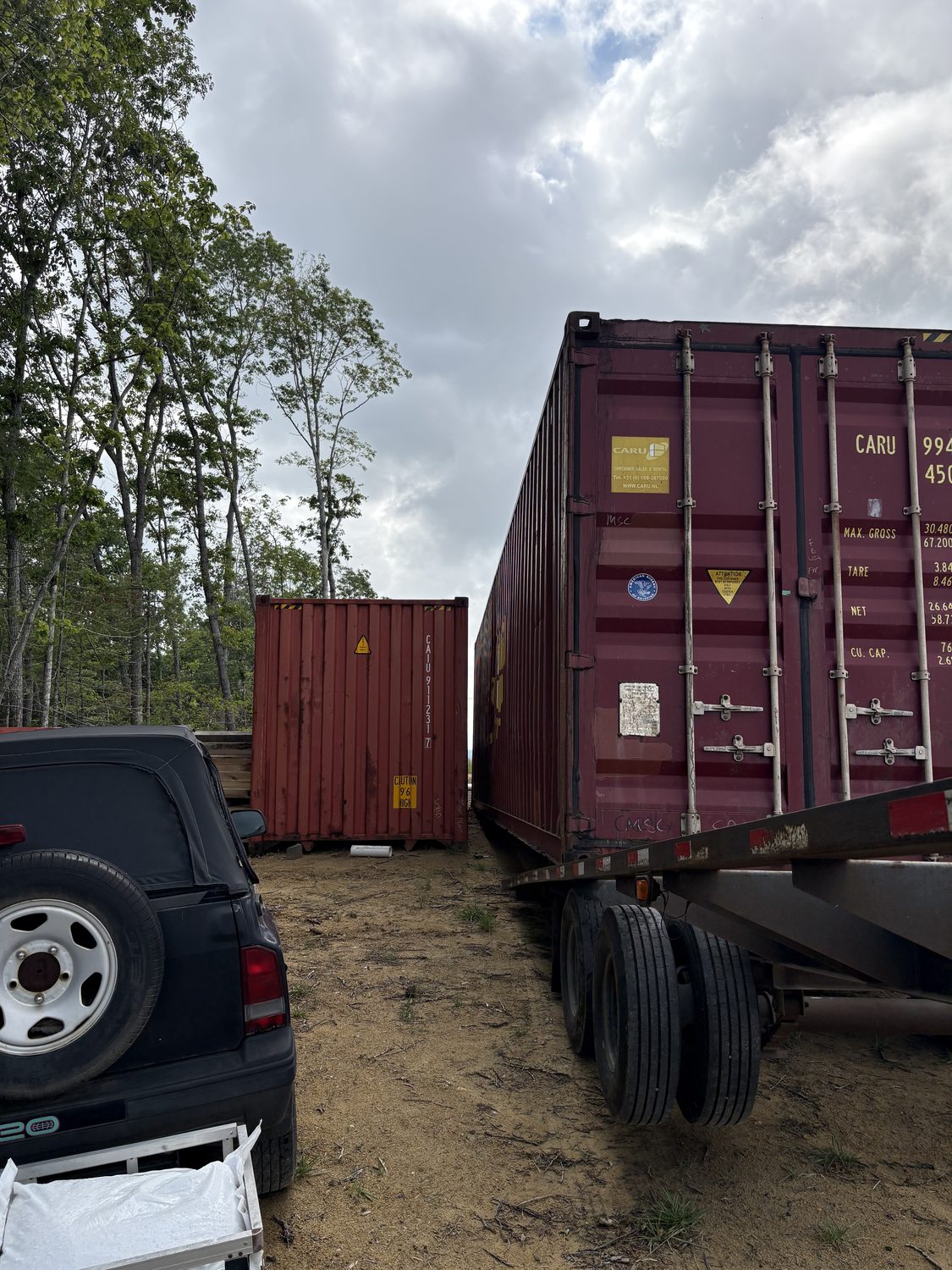
Martinsville made its name in furniture and textile manufacturing, and towns built on that kind of work tend to keep real tools in the garage and a shop out back. It is also a city people know from the outside for its NASCAR short track. The storage problem underneath is the same one any small city has: things worth keeping, and nowhere dry and locked to keep them.
The homeowner version arrives the same way every time. The garage stopped being a place you could park. The shed has a soft corner and a leak. Building something new means a contractor, a permit conversation and most of a season of waiting. A 20-ft container is about 160 sq ft of dry floor behind steel doors and a welded lockbox, it lands in an afternoon, and thirty years outdoors is a normal life for one.
Contractors come at it from the other side. A site with nothing secure on it means loading tools back into a trailer every evening or gambling nothing walks off overnight. A container parked on the job settles that and keeps material out of the weather. Rent it for the length of the build.
Small businesses use them as overflow room: a shop out of back room, a service outfit with parts and seasonal stock, a church or a ball club with gear that only comes out part of the year. Past the city line the use turns agricultural, for feed, fencing, implements and anything with an engine that should not spend a winter under a tarp.
If you are torn on size, a 20-ft fits a tighter lot and asks less of your approach. A 40-ft gives you about 320 sq ft and costs less per square foot, if the ground and the drive can take one. Walk the spot before you decide.
A container arrives on a tilt-bed truck. The trailer angles back, the box eases down onto blocks, and the truck pulls clear of it. That is the entire trick, and it is why the approach matters more than nearly anything else you decide.
Here is what the driver needs waiting at your address:
That last one gets skipped and it is the one people regret. Go stand where the container is going and picture pulling both doors open and carrying something heavy out. Now picture it in February with snow on whichever side the doors swing over. Say which way you want them before the truck rolls.
On an open lot with a gravel drive, none of this needs a second thought. On an older in-town parcel with a narrow drive, a fence line and trees over it, walk the approach yourself, from the street looking in rather than from your back door. If you are unsure, describe it on the phone or send a photo. We would far rather study a picture now than turn a truck around later. Our delivery preparation guide runs the full checklist.
Here are the figures without any hunting for them. Used cargo-worthy steel runs from $3,200 for a 20-ft and from around $4,900 for a 40-ft, and both of those are delivered numbers. For a Martinsville address nothing gets bolted on afterward, because the drive, the leveling on blocks and a welded lockbox are all sitting inside them already.
Want something closer to new? A one-trip container has made a single loaded voyage and still carries factory paint, tight seals and a clean floor. Expect it to run several hundred to a couple thousand dollars more than a used box of the same size. Where inside that spread it lands depends on what is standing on the ground the week you ask, so we quote it on the phone rather than print a figure.
Renting runs from $165 a month on a 20-ft and $235 on a 40-ft. It is month to month with no contract, so the box goes back the month you stop needing it and not a payment later. Rent while the need has an end date. Buy when it does not.
The line between those two is arithmetic, and we publish where it falls. Somewhere around 18 to 20 months a rental has cost you what the same box would have cost to own, and every month after that you are paying for something that stays ours. Our buy versus rent guide shows the working.
We do not publish a stock list. What is on the lot turns over week to week, so call and ask what is standing there. Give us the size, the condition you have in mind and the address it is headed to, and the quote comes back the same day. We are at (276) 237-6144 or [email protected], 8 to 5 Monday through Friday. Would you rather put a hand on the steel first? The yard sits in Woodlawn, the sales lot in Wytheville, and both are open to walk.
Free delivery does not stop at the city line, so the smaller places around Martinsville ride along on the same run east.
Stuart · Floyd · Collinsville · Bassett · Ridgeway · Fieldale
Not on the list? You're probably still in range — see the full service area or just call us and we'll check the mileage for you.
Delivery is free at this distance and the quote comes back the same day. Give us a size, a condition and a drop address, and we will pick a date with you.
Same-day reply. We'll send a real number, a real delivery window, and any photos we need to confirm fit.
You'll hear back from us today (or first thing tomorrow if it's late). For anything urgent, call (276) 237-6144.