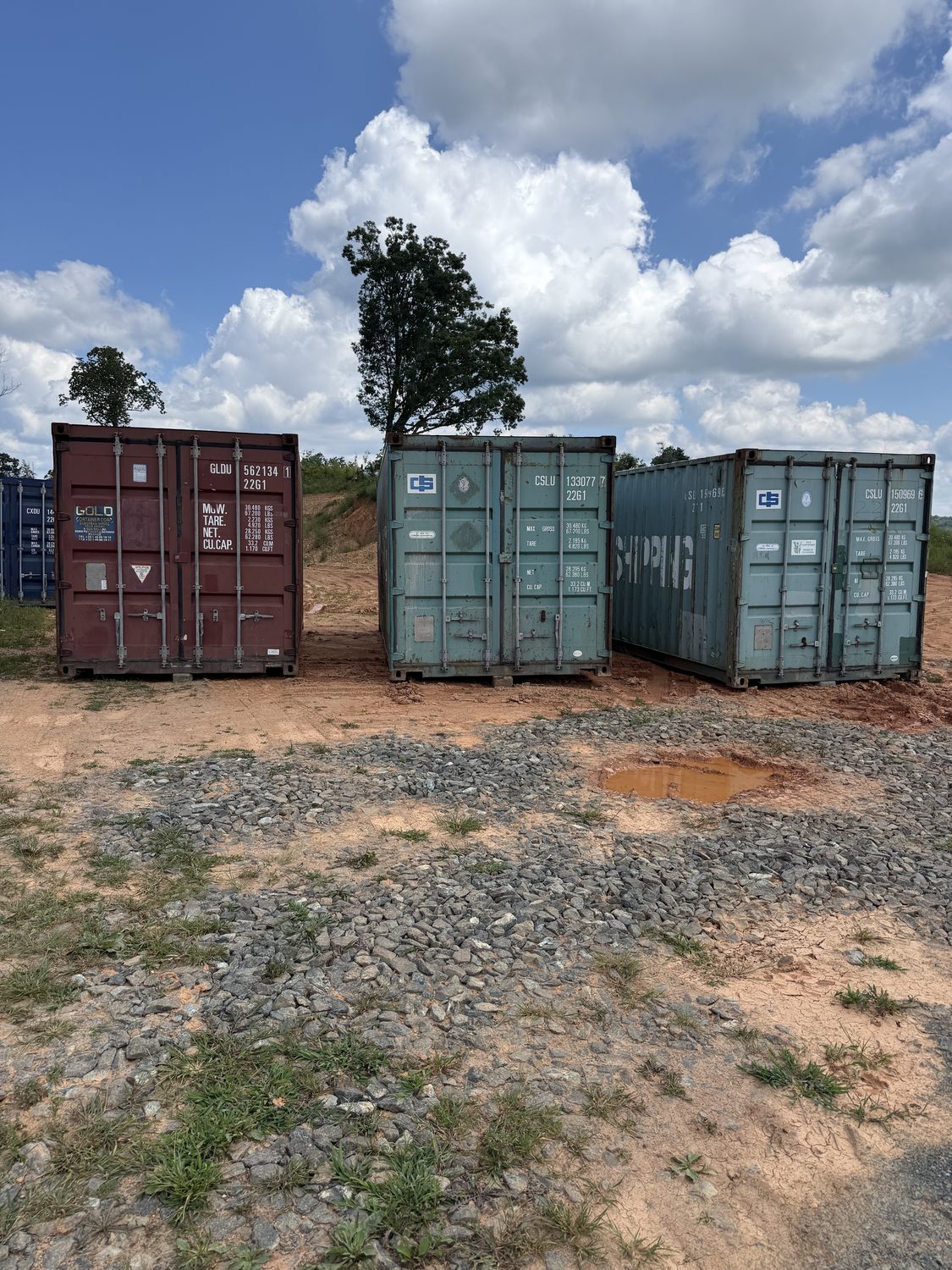
If you came here from our Carroll County or Wythe County pages, set that picture down. Those counties have no adopted countywide zoning. Montgomery County does. Chapter 10 of the county code calls itself the Montgomery County Zoning Ordinance, and behind it sit zoning districts, a zoning administrator, a board of zoning appeals and a published fee schedule.
It also has something Carroll, Wythe and Grayson do not: a short paragraph in the supplemental district regulations written specifically about storage containers. It is a screening standard, not a ban, and it carries a broad agricultural exemption. That paragraph is why this page exists.
So this reads differently from our Grayson County page, where the county had zoning and nothing written about containers. Here there is real text to read first. You still end up on the phone, because the ordinance leaves the practical judgment to the zoning administrator, but you get there knowing what you are asking about.
This is adopted law, not a draft on a planning page
Worth saying plainly, because several counties around here are writing a first ordinance and their draft maps float around online. Montgomery County finished that argument long ago. Section 10-1 opens by naming itself: "This chapter, and the official zoning map made a part hereof, shall be known and may be cited and referred to as the 'Montgomery County Zoning Ordinance.'" A recent text amendment is enacted by the Board of Supervisors, and you cannot amend and reordain something never adopted.
The districts are ordinary and recognizable: A-1 Agricultural, C-1 Conservation, R-R Rural Residential, R-1, R-2, R-3 and RM-1, with overlays on top including a Flood Damage Prevention Overlay and a Route 177 Corridor Overlay.
One boundary matters more than anything else below, and section 10-2 sets it. The ordinance applies "within the unincorporated area of Montgomery County, Virginia." Everything here about screening, setbacks and county zoning permits is aimed at land outside the two towns.
The ordinance does address containers, and here is what it says
Section 10-41, Supplemental District Regulations, carries a subsection headed Screening of storage containers. It reads, in full:
The first half is a sightline rule rather than a setback rule. Most of what a zoning office tells you about an accessory structure gets measured with a tape from a property line. This gets measured with your eyes, from two directions at once: from the public right of way, meaning the road, and from adjacent uses, meaning what the neighbors look at. A spot that clears every setback in your district can still be the wrong spot under this sentence. Walk your property from the road, not just from the back door.
The second half is the exemption, written broadly: the standard "shall not apply to any lawful agricultural operation." A working farm is plainly inside that. A rural residential lot with a big garden is not obviously inside it, and we will not tell you that you are. That judgment belongs to the county.
What the subsection does not say matters as much. It sets no screening height, no fence type, no plant list, no opacity standard and no measuring point, and it names no reviewer. Anyone handing you a specific fence height for this county is inventing it.
How the ordinance sees a container the rest of the time
Beyond that paragraph we found no container specific permitted use listing, no cap on containers per parcel, no day count and no separate container permit. Section 10-61 defines a structure as "An assemblage of materials constructed or built for use, occupancy or ornamentation and installed on or above the surface of the land or water," and a steel box on blocks is not arguing its way off that list. The narrower term is where people get caught: an accessory structure is "A subordinate structure detached from but located on the same lot as the principal structure." A container joining a house or a barn is the easy case. A container going onto vacant acreage with no principal structure is the harder one.
- In A-1, R-R and R-1, no accessory building may sit closer than ten feet to a side or rear lot line
- In those same districts, an accessory structure that exceeds the square footage or the height of the principal structure is a special use, which is a permit and a hearing rather than a form. A 40-ft container beside a small building can land right on that line
- Whether the county classifies a container as a building as well as a structure is the administrator's call, so ask instead of assuming
The state settles the building permit. It does not settle the zoning permit.
The building code side is easy
Section 8-18 of the county code adopts the Virginia Uniform Statewide Building Code by reference and adds nothing of its own about containers. So the statewide exemption lands here exactly as it does in Carroll, Wythe or Grayson: 13VAC5-63-20, Section 102.3, Exemptions, item 11 exempts storage containers placed on site temporarily or permanently for use as a storage container, with 13VAC5-91-20(E) as the companion. Our Virginia permit guide walks that text line by line. The exemption attaches to the use rather than the steel, and it runs on no clock.
The zoning side is a separate question
Section 10-53 says: "No building permit or certificate of occupancy shall be issued, no building or structure shall be erected or occupied, no use, or change in use commenced, and no excavation or grading commenced relating thereto unless a zoning permit therefore has been issued by the zoning administrator and is still valid."
That sentence is not conditioned on a building permit being required. It independently forbids erecting a structure without a zoning permit, and the ordinance defines structure broadly enough to reach a container on the ground. We could not find a county page saying whether a plain storage container triggers one, so the honest posture is assume yes and confirm, not assume no because the building code let you off.
It is a small step, not a project. The county's zoning permit path covers accessory structures, and the county states approvals are generally done within one to two business days of submittal. The published zoning permit fee at the time of writing is $30, and fee schedules are adopted annually, so treat that as a number to confirm. Since January 2026 the county has taken building, zoning and land disturbance applications through an online portal at montva.com/opengov.
If the plan is to put people inside the box rather than things, the storage exemption is behind you, section 3115 of the Virginia Construction Code is the starting point, and Building Inspections is the office. Worth adding: we do not pull permits. A permit attaches to your parcel and is filed by you, your builder or your electrician. On modified units our electrical is roughed in only, and a licensed electrician does the final hookup and the inspection in your jurisdiction.
River bottom land turns this from optional into required
The county's floodplain rules are not a separate book. They sit inside the zoning chapter as section 10-37, the Flood Damage Prevention Overlay, and one stated purpose is to qualify county residents for the insurance and subsidies provided by the National Flood Insurance Program.
The provision that reaches a container is unconditional. Article III, section 3.1 requires that "All uses, activities, and development occurring within any floodplain district shall be undertaken only upon the issuance of a zoning permit." Section 10-53 reinforces it by listing a location clearance for property in the floodplain or airport safety overlay districts among the application materials.
So inside a mapped floodplain district there is no informal placement. The districts come off the Flood Insurance Study and the FIRM maps, and the ordinance names a Floodway District, a Special Floodplain District, an Approximated Floodplain District and a Shallow Flooding District, the Floodway being the strictest. If your ground runs down to the New River or sits along a creek bottom, treat this as a required question.
Blacksburg and Christiansburg run their own rules, and Radford is not in this county
Montgomery County has exactly two incorporated towns, Blacksburg and Christiansburg, and the split here is stricter than in Grayson County, so do not carry that page's answer over.
On zoning, section 10-2 limits the county ordinance to the unincorporated area, so the screening rule and the ten foot accessory setback above do not apply inside town limits. On building permits, the county states its inspectors inspect all construction in the unincorporated areas of Montgomery County, and both towns run their own building operations. In Grayson County one office covers the county and its towns. Here it does not.
So if the parcel is inside town limits, call the town for both questions. Confirm that it actually is first, because a Blacksburg or Christiansburg mailing address proves nothing. County mapping and the planning office settle it in a minute.
Radford is an independent city
This one catches people constantly, so we will be blunt. Radford is not a town in Montgomery County. Under the Constitution of Virginia, Article VII, section 1, a city is an independent incorporated community while a town is an incorporated community within one or more counties, and Code of Virginia section 15.2-102 carries the same definitions. The county's own about page lists only Blacksburg and Christiansburg, and its Route 177 Corridor Overlay text treats Radford as a separate approving locality.
None of the ordinance sections quoted here govern a Radford parcel. Our Radford page explains where to take that question instead.
Two suites on Roanoke Street, and which one to call
The two county offices share a building on Roanoke Street in Christiansburg, in different suites, which makes this simpler than it sounds.
Montgomery County Planning and GIS Services
The zoning office: district, setbacks, the screening standard, whether a zoning permit is required, floodplain, and whether your parcel is inside a town. Jude Cochran is the Planning and Zoning Administrator and Brea Hopkins is the Director.
- 755 Roanoke St., Suite 2A, Christiansburg, VA 24073
- 540-394-2148
- Monday to Friday, 8:30 a.m. to 5 p.m.
Montgomery County Building Inspections
The building permit desk, and the office to call if the container is becoming occupied space. No individual building official is published, so ask for the department.
- 755 Roanoke St., Suite 1D, Christiansburg, VA 24073
- 540-382-5750
- Monday to Friday, 8:30 a.m. to 5 p.m.
If your parcel is inside a town
- Town of Christiansburg, 100 E Main Street, Christiansburg, VA 24073. Planning at 540-382-6120, Building Inspections at 540-382-6120 extension 1152
- Town of Blacksburg: ask the town for its planning and building safety desks. We could not verify a direct line off the town's own published page, and we would rather print nothing than print a number we did not confirm
Numbers and hours move. Everything above was read off the county's own department pages and the town's own staff directory when this page was written, and the locality, not us, is the authority on it.
Five questions for Planning and GIS Services
Pull up the parcel number or the 911 address first, tell them plainly that you want to set a shipping container for storage, and work down this list.
- Which zoning district covers this parcel, and does it allow a storage container as an accessory structure by right?
- Do I need a county zoning permit before delivery, and does the storage container screening standard in section 10-41 apply to my parcel, or does the lawful agricultural operation exemption cover me?
- Is there already a principal structure on this lot, and would a 20-ft or a 40-ft container exceed its footprint or height, which would push this to a special use permit?
- Does any part of this parcel fall in a floodplain district, given that the Flood Damage Prevention Overlay requires a zoning permit for all development inside one?
- Is this address inside the Town of Blacksburg or the Town of Christiansburg, because if it is, the county ordinance does not apply and I need the town's offices instead?
If the placement is temporary, a box on a job site for the run of a build, say so at the start. It can change the answer. Then note the name and the date on the same page as your parcel number, and if the answer is one you are going to rely on, ask them to put it in an email.
Where the road cannot see it, the truck may not fit either
Both towns and the unincorporated ground between them sit inside our free 75 road mile delivery and leveling zone, so mileage is not what decides a Montgomery County drop. Room is. The two numbers to keep in your head are 65 and 95: that is the straight pull-in, in feet, that a 20-ft and a 40-ft each want before the truck can set the box down, and the path has to be clear overhead the whole way in, not only at the spot itself.
The screening standard adds a second question to the same patch of ground. It pushes a container toward the part of the lot the road cannot see, and on a tight parcel that is often the part the truck cannot reach: around the back of the house, past a fence line, under a low limb. On open A-1 acreage it resolves itself. Anywhere tighter, work both problems at once, sightlines and approach, before you settle on a corner. Send photos when you call. Our delivery preparation guide covers measuring the approach and the foundation guide covers what the box sits on.
The honest read on unincorporated acreage
Own unincorporated ground in this county and want a locked steel box for equipment, feed, tools or the overflow from a shop? The odds are strongly in your favor. The state's own text takes storage use out of the building code, and an accessory storage building is unremarkable on A-1 land.
But settle the two things this county has on the books: whether the screening standard reaches your parcel, and whether a county zoning permit is required before the truck rolls. Both come out of the same phone call, and neither is a question you want to meet after a container is already in your yard. We sell and deliver containers. We are not attorneys and we are not code officials, and the zoning administrator and the local building official have the final word over anything on this page.
With the district settled and a spot chosen, what is left is the ordinary buying decision. Inside the free zone a used cargo-worthy 20-ft is $3,200 delivered. A 40-ft runs around $4,900. Rent instead and a 20-ft is $165 a month. The lockbox is welded on before the container leaves the yard, on every unit we sell and every unit we rent, so it is not something you have to add.