Ask someone who has owned a container for a year which modification they would buy first if they started over, and a surprising number say the walk in door. It is not the exciting mod. It is the one that removes a small daily irritation you did not price in when you bought the box.
A personnel door, also called a man door, is a standard steel walk in door welded into the container wall. This page covers where it goes, which way it should swing, what happens at the threshold, and the one real cost of adding it.
Cargo doors are built for a port, not for Tuesday
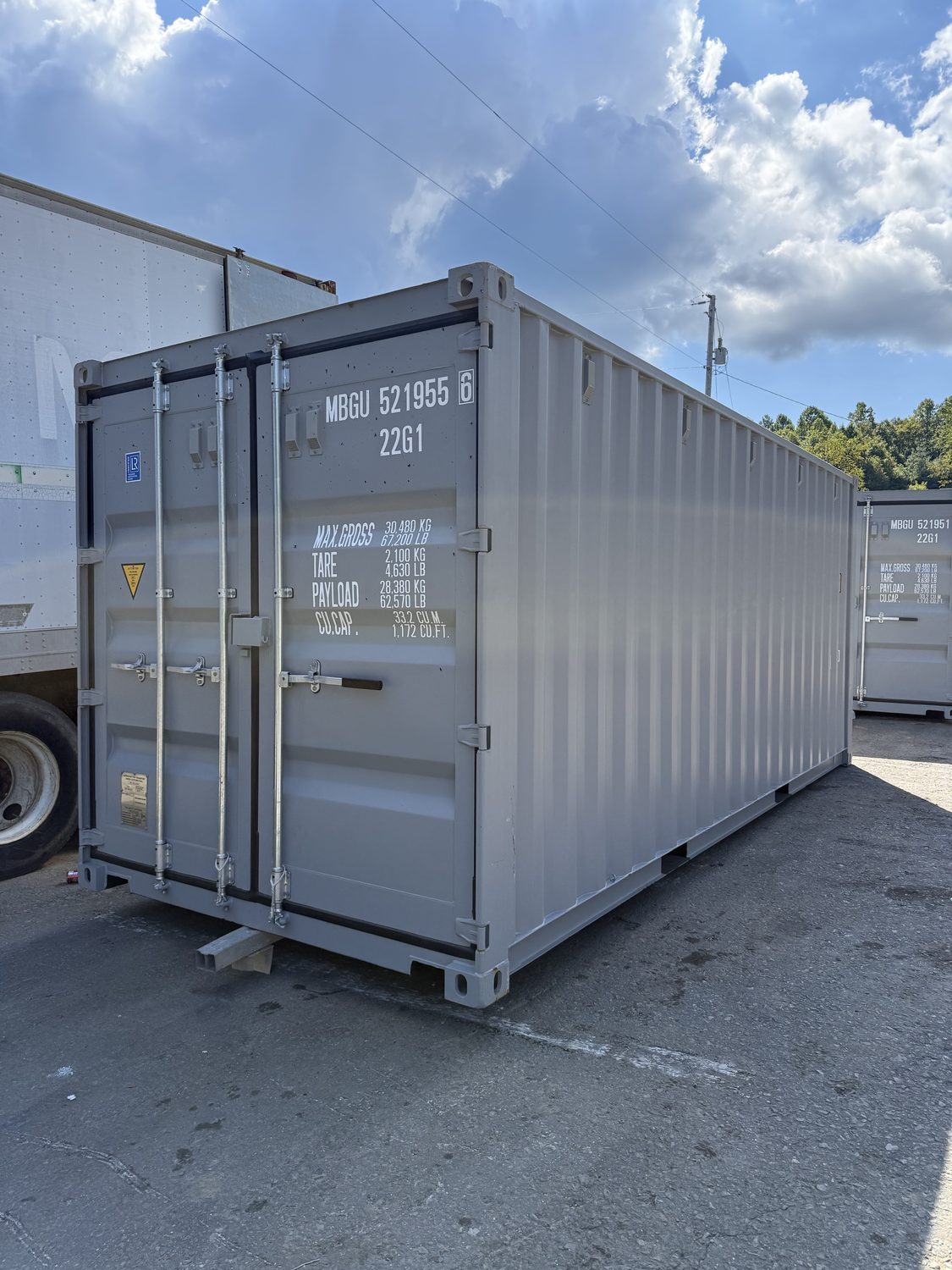
A container's cargo doors were designed to be opened by a crew, at a terminal, a handful of times in the box's working life. They are tall, they are heavy, they swing wide, and they need clear ground in an arc in front of them to open at all.
That last part is what catches people. A 40 ft container backed into a treeline with the doors facing a slope is a container whose doors you now fight. Add snow on the ground, or mud, or a padlock that has been sitting in freezing rain, and a thirty second errand becomes a five minute one.
- You need swing clearance in front of the doors, every time, in whatever the weather is doing.
- Both doors usually have to come open to get at anything not right by the opening.
- Every opening cycle is wear on the gasket and the locking gear that keeps the box weather tight.
- In winter the whole end of the container is open to the wind while you are looking for one thing.
A walk in door solves all four at once. You open a normal door, you step in, you step out. The cargo doors stay shut, sealed, and locked for the times you actually need full width access.
Which wall, and which way it opens
Two decisions get made before we cut, and both are about how you will actually walk up to the container once it is sitting on your ground.
Side wall or end wall
A side wall door near one end is the common choice. It puts the door where the path from the house or the shop already comes in, and it keeps the whole cargo door end free. On a 40 ft container people often ask for the door partway down the side instead, so the walk from the door to the far end is halved.
An end wall door, set beside the cargo doors, is the simpler cut and makes sense when the container backs onto something and only the end is reachable. We can also fit a door into one of the cargo doors themselves on some builds, or add double personnel doors where two people need to pass with material.
Swing direction
Doors on a container almost always want to open outward. Interior space is tight and a door swinging in eats a chunk of floor you were going to shelve. Outward also means the door is not fighting anything you have stacked against the wall. Which side it hinges on comes down to which way you approach it and whether wind tends to come across that face.
The part nobody asks about until it leaks
A container floor sits above the ground on the steel underframe, so a walk in door has a step up at the bottom. That step is not a flaw, it is what keeps water on the outside, and how it is finished is most of the difference between a door that stays dry and one that does not.
We frame the opening in steel the same way we frame any cut, weld in the jambs and header, and set the door so the threshold sheds water away from the opening rather than into it. On the inside, the finished threshold is what you scuff your boots over a few thousand times, so it gets built to take that.
- The step up is real. If the container is being used by anyone who should not be stepping up, say so early and we will talk about a landing or a ramp.
- A door on the uphill side of a container on sloped ground is the one most likely to see water at the threshold. Placement can fix that for free.
- Weather stripping and a sweep do the day to day sealing. They are wear parts and they are meant to be replaceable.
- The container still needs ventilation. A walk in door is not an air exchange, and a sealed box with a warm interior will still make condensation on the ceiling.
That last point is worth taking seriously. If the container is going to hold anything that minds moisture, the door and the vents get specified together rather than one after the other.
Every opening you add is a thing to secure
This is the honest cost of a personnel door and we would rather say it plainly. A container's security comes from being a sealed steel box with one hardened opening. Cutting a second opening into it means there are now two, and the new one is a normal door with normal door hardware.
That is not a reason to skip the mod. It is a reason to spec the door properly rather than treating it as an afterthought. A commercial grade steel door in a welded steel frame, with hardware chosen for the job, is a serious door. A cheap slab in a light frame is the weak point of an otherwise excellent box.
Your cargo doors keep their welded lockbox regardless, and that lockbox comes standard on every container we sell and every one we rent. The personnel door is the opening that needs the thought.
The builds a walk in door belongs to
The hub lists six build outs our shop does regularly, and a personnel door is in most of them. It is a supporting mod rather than a headline one.
- Dry and secure storage. Vents, a man door, and the welded lockbox. The classic three, and the reason this door exists.
- Workshop. Roll up door for equipment and light, personnel door for the ninety percent of trips where you are carrying a tool, not driving a machine.
- Mobile office. A walk in door is not optional here, it is the door. See the mobile offices build for the full package.
- Dog kennel or farm use. A normal door you can open one handed while carrying feed, without opening the whole end of the building.
We fit personnel doors to containers you buy from us, containers you rent month to month, and containers you already own if they are structurally sound and wind and water tight. Everything is cut, welded and finished in our own shop in Woodlawn, and the finished container is delivered and leveled free within 75 road miles.
A personnel door on its own is one of the mods that often turns around in a few days. Combined with insulation, electrical, lighting and finished walls it becomes part of a longer build, usually one to a few weeks depending on scope and parts. Either way the timeline is in writing with the quote.