In the City of Bluefield, West Virginia, Sec. 6-31 adopts the State Building Code and Sec. 44-90(b) limits where an accessory structure may sit on a residential lot. In the Town of Bluefield, Virginia, Sec. 74-72 requires a zoning permit before buildings or structures are started and Sec. 74-801 keeps accessory storage buildings out of front yards.
Which Bluefield a lot sits in comes first, the step our notes on Bluefield container delivery begin with. After that, each side's own code takes over: the city's on Municode as Supplement 8, codified through ordinances of August 12, 2025, and the town's as Supplement 7, codified through an ordinance of November 19, 2024.
| City of Bluefield, WV | Town of Bluefield, VA | |
|---|---|---|
| Building code | State Building Code adopted, Sec. 6-31 | Virginia Uniform Statewide Building Code adopted, Sec. 10-71; the town building official enforces it |
| Shipping container rule | We found none in Chapter 44 or the city code search | We found none in Chapter 74 or the town code search |
| Accessory structure on a home lot | "shall not be more than 20 feet high, nor occupy more than 20 percent of the rear yard"; front yard only by variance, Sec. 44-90(b) | Storage buildings in the rear or side yard, never the front, Sec. 74-801; set separations, Sec. 74-802 |
| Permit before building | City permit approved by the city engineer, Sec. 44-45(a) | Zoning permit from the code official, Sec. 74-72 |
| Flood rules | Chapter 18; the city manager is floodplain administrator | Chapter 74, Article VI; maps kept at the zoning administrator's office |
| Who to call | Zoning: city engineer, 304-327-2401 ext. 2463. Building permits: Code Enforcement, ext. 2462 | Zoning Administrator, 276-322-4626 ext. 1013. Building Official, ext. 1014 |
Section numbers are each town's own. The city's ordinance bank lists later ordinances not yet codified; we found none that changes a section cited here.
The City of Bluefield, West Virginia answers the adoption question in its own code. Sec. 6-31 says "The State Building Code be and is hereby reenacted and adopted as promulgated by the West Virginia State Fire Commission," as the rule filed May 5, 2022 and effective August 1, 2022 "as amended," and it takes in the 2018 International Building and Residential Codes, among others; its history note ends with an ordinance of August 9, 2022. The state code reaches only the places that adopt it, a point our guide to West Virginia container permits makes for the whole state.
The state rule the city adopted carries its own narrow exception: section 6.1.a of the rule lists "Group U utility structures and storage sheds comprising an area not more than 200 sq. ft. which have no plumbing or electrical connections and are used only for residential storage purposes" among structures "not subject to inspection by local jurisdictions," and adds that "Not included are those utility structures and storage sheds which have plumbing or electrical connections are a non-residential use or for the storage of explosives or other hazardous or explosive materials." Whether any container falls under those words is the city building official's reading.
The city's Code Enforcement page is plain about permits: "Building permits are required for all jobs except painting, wallpapering, trim work, floor sanding, carpeting, and landscaping," the inspection department "also issues all building permits," and getting one "is ultimately the responsibility of the property owner." Ask the Building Inspector whether setting a container on your lot is a job that needs one. The department is at 200 Rogers Street, 304-327-2401 x 2462, and the page invites walk-ins at city hall Monday to Friday, 8:00 a.m. to 4:30 p.m.
A box wired in our shop arrives roughed in, with the final hookup left to a licensed electrician, and the city's page adds that "An electrical permit is required before the inspector is called." Sales, rentals and modified boxes for the city are on our Bluefield container page.
We found no section of the city's zoning chapter, Chapter 44, that names a shipping or portable storage container; its freight-container words sit in a heavy-industry use row for a "Terminal for transferring trailers or containers to and from railroad flatcars." So the question lands on the chapter's definitions. An accessory structure, building or use is one "Subordinate to and serves a principal building or principal use," "Subordinate in extent, area, or purpose to the principal building or use served," and "Located on the same lot as the principal building or use served," and a structure is "anything constructed or erected, the use of which demands a more or less permanent location on the land, or anything attached to something having a permanent location on the land."
On a residential lot, Sec. 44-90(b) sets the placement rules for an accessory structure: it "shall not be more than 20 feet high, nor occupy more than 20 percent of the rear yard"; "No accessory structure shall be allowed in a front yard except as a variance by the board of adjustment"; and none may sit "less than five feet from an adjoining side yard, nor less than ten feet from any street line or alley." The residential use table lists "Accessory uses, incident to any of the principal uses above listed" in the R-1, R-2, R-3 and RMF districts.
Before any structure is erected, Sec. 44-45(a) wants a permit "approved by the city engineer" and issued by the city manager, and the city's engineering page says its zoning staff review building permits "for compliance with the City's Zoning Code." Ask the city engineer, at 304-327-2401 ext. 2463, which district your lot is in and how the office reads a container against those definitions; setbacks, the page notes, "are different in each zoning area."
One more line covers only the Bluefield Avenue Urban Renewal Project area: Sec. 44-266 bars "structures of a temporary character to include house trailers (with or without wheels), basement, tent, shack, garage, barn or other sub-building," except "temporary construction sheds during the construction of buildings," yet the same section says its controls "shall remain in effect until January 1, 1985." Whether any of it still governs a lot there is the city's answer to give.
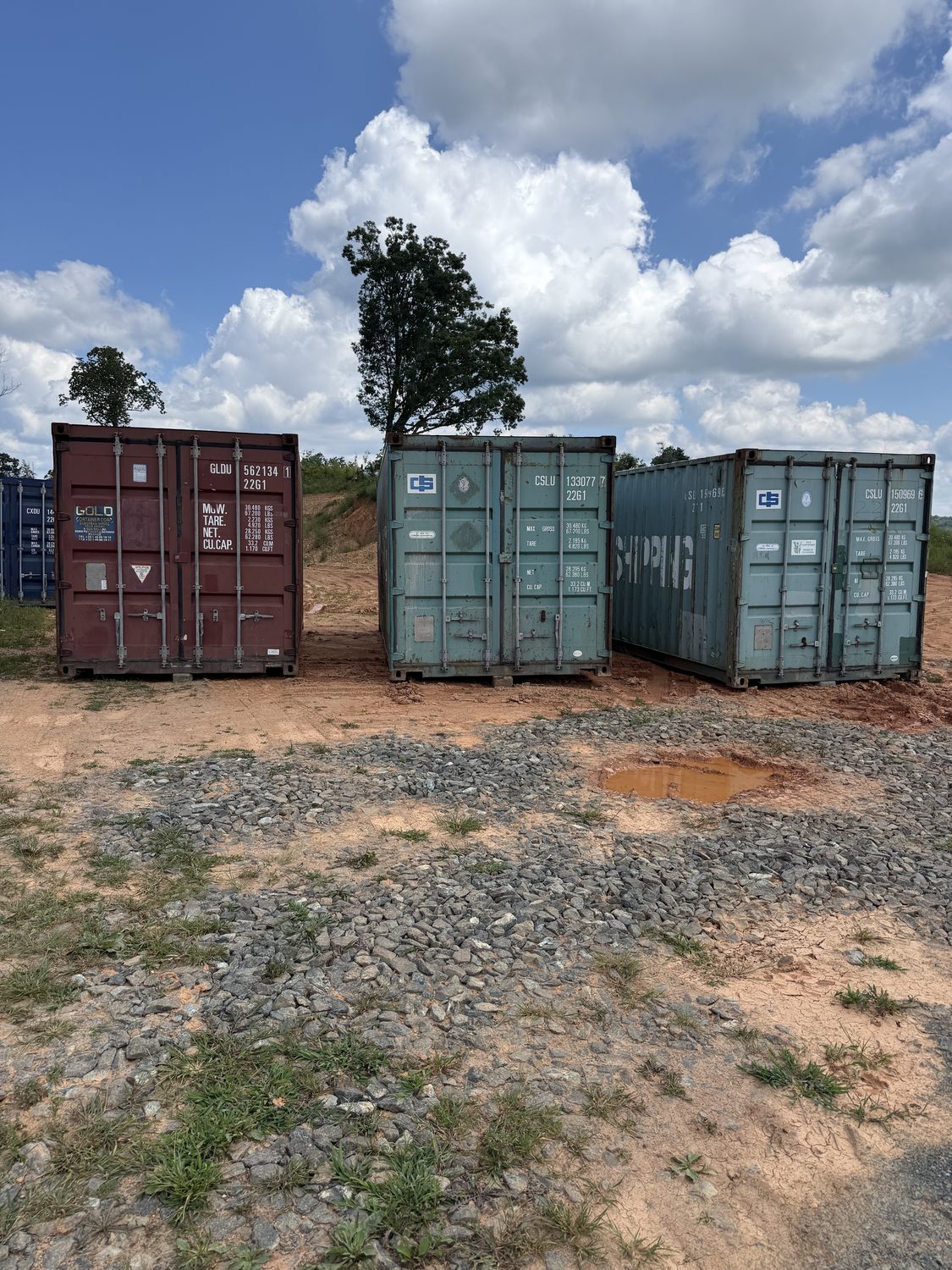
The city's Flood Control chapter defines development to include "storage of equipment or materials" and requires a floodplain permit for development or the placement of any structure "within the designated areas contained herein," which the chapter takes from FEMA's flood study and rate map for the county, "dated March 2, 2005, or the most recent revision thereof." "The city manager shall be the floodplain administrator," the chapter says, so a City of Bluefield flood question goes to city hall.
Inside a mapped area, the chapter says storage of other material or equipment "may be allowed if not subject to major damage by floods and firmly anchored to prevent flotation or readily removable from the area within the time available after flood warning," and that "No materials that are buoyant, flammable, explosive, or in times of flooding could be injurious to human, animal or plant life, shall be stored below base flood elevation." Ask before you load a box with anything that floats or burns, and see our answer on whether a container can sit in a floodplain for what standing water does to the steel.
In the Town of Bluefield, Virginia, Sec. 74-72 says "Buildings or structures shall be started, reconstructed, enlarged or altered only after a zoning permit has been obtained from the code official," and the zoning administrator interprets and applies the chapter. We found no provision in Chapter 74 or the rest of the town code that names a shipping, cargo or portable storage container. The town's definitions carry the question instead: an accessory building is "a separate and subordinate structure upon the same lot occupied by the main structure," and a structure is "that which is built or constructed, an edifice or building of any kind, or any piece of work artificially built up or composed of parts joined together in some definite manner."
Accessory buildings used for storage "shall be permitted to be located in any portion of the rear yard or side yard," Sec. 74-801 says, and "No storage building shall be located in the front yard"; accessory buildings are "separated from the main building by ten feet unless otherwise stated," and Sec. 74-802 adds that in residential districts other than R-1A none may be "closer than three feet to any property line." In the town's R-1A, R-1 and R-2 districts, accessory buildings or structures "shall not exceed the height of 15 feet."
The town enforces Virginia's statewide building code through its own building official, and Sec. 10-73 requires a building permit "Except as otherwise provided by law" before any activity subject to that code. Virginia's code exempts containers kept for storage, the line our Virginia container permit guide quotes word for word, and that exemption does not touch the town's zoning permit.
Ask the Zoning Administrator, 276-322-4626 ext. 1013, about the zoning permit and where on the lot a container may go, and the town Building Official, ext. 1014, about the building code. The town office is at 112 Huffard Drive, and we found no office hours on its pages. Zoning permit fees are set by the town council, with schedules kept at the zoning administrator's office and the town clerk's.
Write out the full street address, city and state, say whether the lot sits inside the City of Bluefield or the Town of Bluefield limits, pick 20-ft or 40-ft, and add a photo of where the box should go. A same-day quote follows, and the permits stay with the lot's owner.
Same-day reply. We'll send a real number, a real delivery window, and any photos we need to confirm fit.
You'll hear back from us today (or first thing tomorrow if it's late). For anything urgent, call (276) 237-6144.