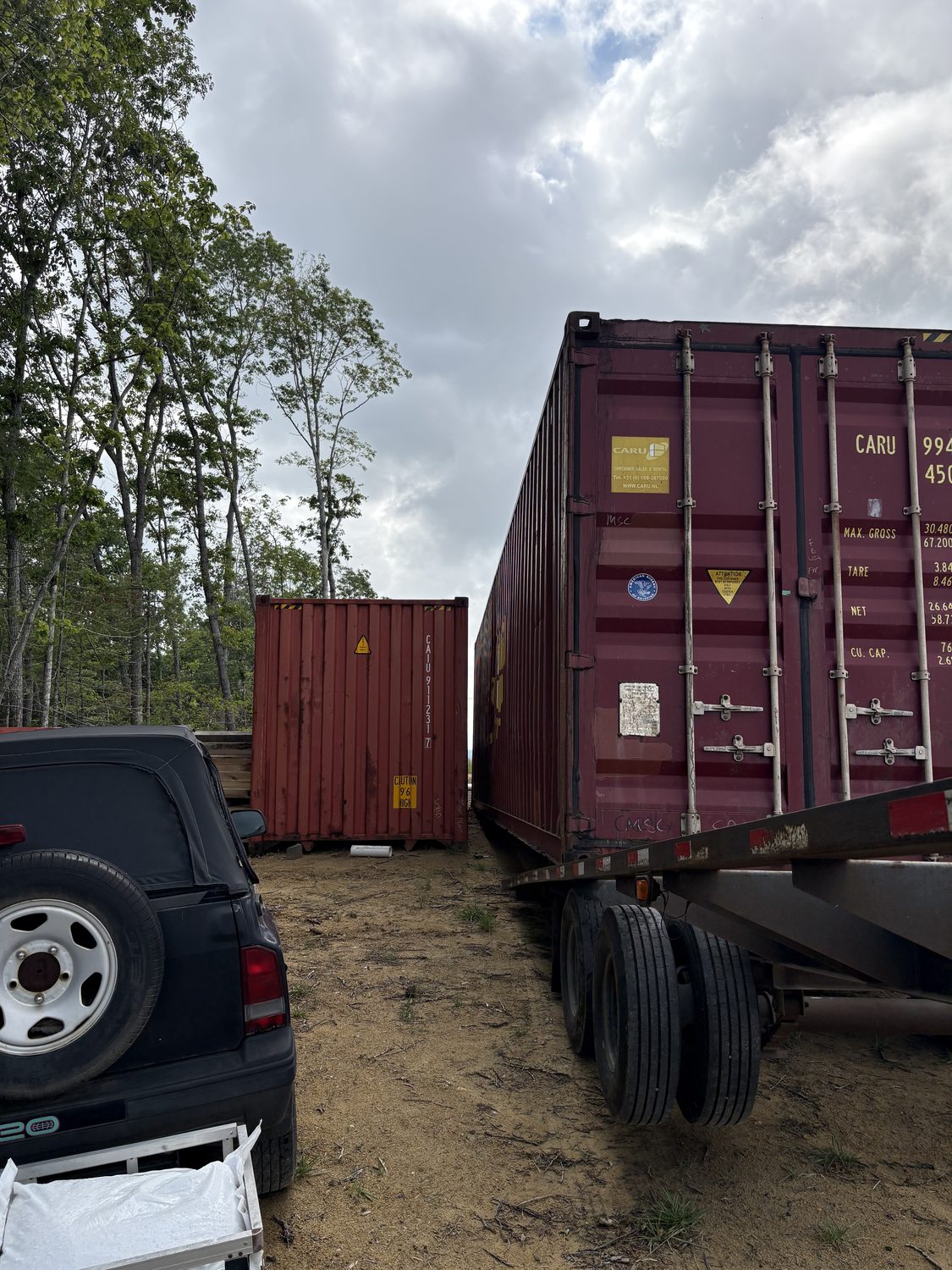
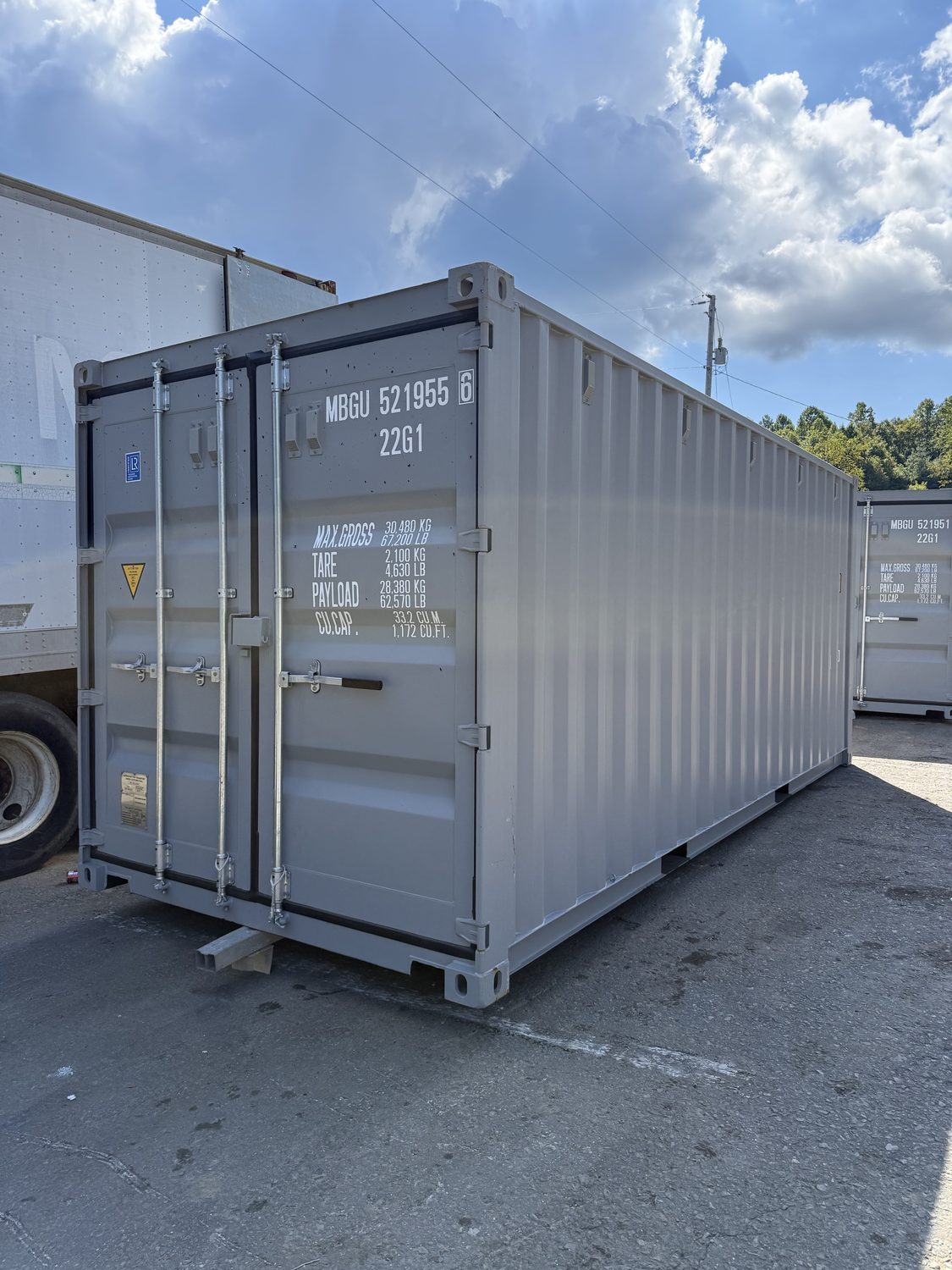
A Pulaski mailing address can answer to any one of three rulebooks, and the envelope will not tell you which. Settle the desk first, then settle the corner of the property the container goes on.
Most places we deliver have one office to ring about a container. Pulaski has three, and the line that decides which is not printed on your envelope. Whichever office picks up will answer you honestly about the rulebook it administers, and that may not be the rulebook your parcel is under.
The county's Unified Development Ordinance reaches the unincorporated county and the Town of Draper. The Town of Pulaski writes and enforces zoning within its own corporate limits, and the Town of Dublin does the same. Three rulebooks, and one of them governs the ground you are looking at.
Our part is steel and a truck. We file no zoning applications, we pull no permits, and we cannot look up a parcel's district for you. What the ground has to give us is the second half of this page.
Find yours before you dial. These numbers belong to those governments, not to us.
The town sits outside the county ordinance and runs its own. The desk you want sits at 42 1st Street NW: Town of Pulaski Planning and Zoning, reachable on (540) 994-8615 and staffed 8:30 to 5 on weekdays.
Dublin splits two ways, and this is the detail people get backwards. Zoning is the Town of Dublin's, at the town office, 101 Dublin Park Rd. The building permit comes from Pulaski County, which took over Dublin's building permits on May 1, 2025. Our Dublin page carries the same split. No Town of Dublin phone number appears on the town's own published pages, so we print none rather than repeat one an aggregator invented.
The county ordinance names the Town of Draper as territory it covers, so Draper has no separate desk. Pulaski County Planning and Zoning sits a few blocks away at 143 Third Street NW, Suite 1, on (540) 980-7710, and the county building office answers that same line.
One flag before you go further. If the county desk turns out to be your desk, read the Pulaski County permit page before you order anything, because the county ordinance puts a hard restriction on container storage in its residential districts and that page quotes it word for word.
Postal geography and corporate limits were drawn by different bodies for different reasons and they do not lie on top of each other. A road can run into town and back out inside a mile, so the fact that the house across the fence pays town water proves nothing about yours.
Two checks settle it, and both are quick:
Then note who told you and when. This is not a determination we can make from the yard, however well we know the road. For the general shape of the question first, see our permit guide and the state citation on the Virginia permits page.
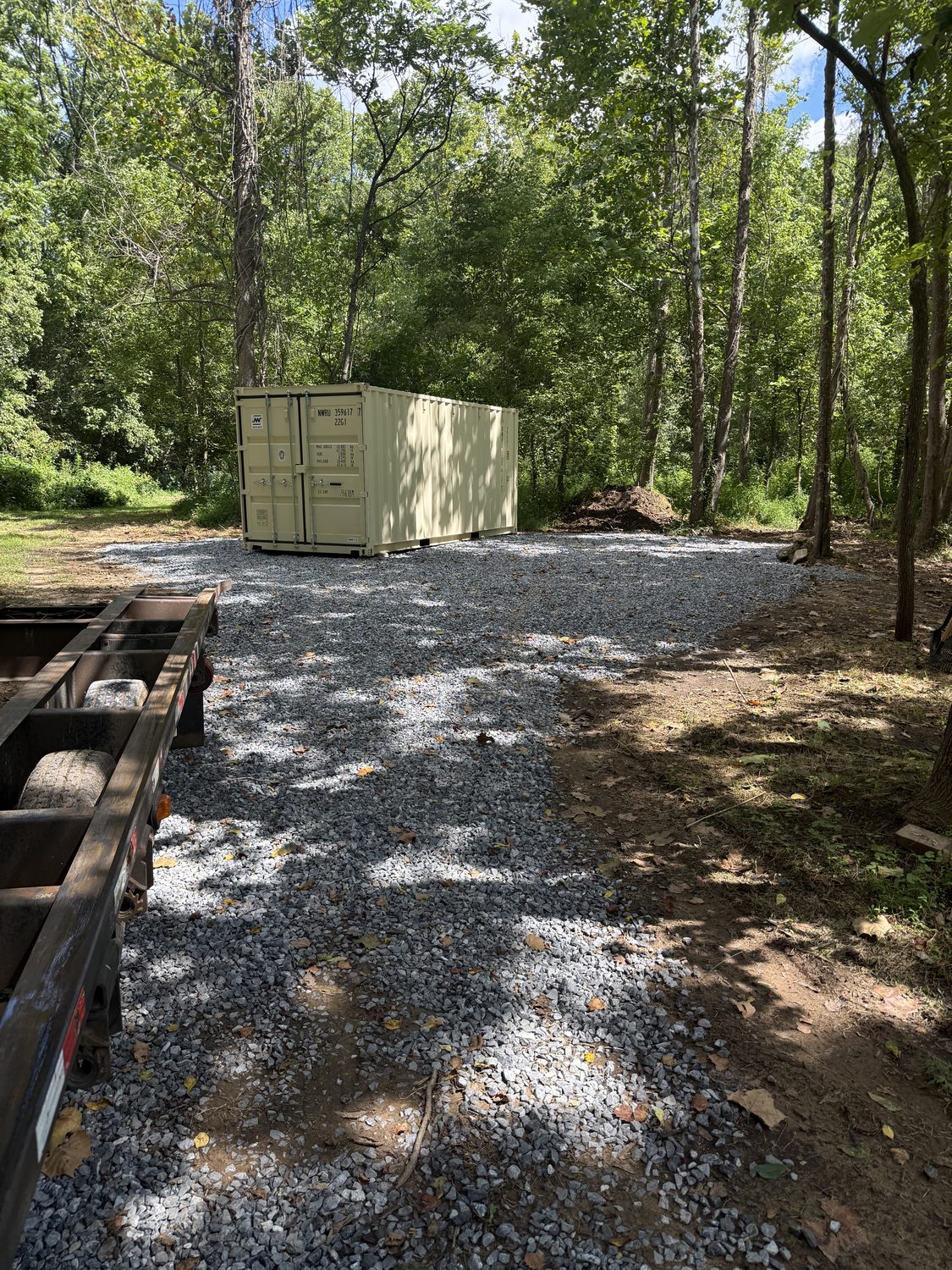
Start the measurement at the finish. Stand where the container will end up and count back from there: about 65 feet of straight pull-in for a 20-ft, about 95 feet for a 40-ft. Behind that run the truck still needs room to swing around and back into it. Measuring from the road instead is how a spot that looked generous comes up short on the day.
Then weight. The rig is heavier than what it carries, so the question is not whether your yard holds a box, it is whether it holds the truck bringing one. Compacted gravel takes it best, and a patch that was firm in August with three wet days on it is the failure we see over and over.
Read the yard for water while you are out there. Stay off the low corner and out of the runoff path. Ground that stays wet under a container gives way where the blocks sit, and the underside corrodes while nobody is looking at it. Either way you find out at the doors. A real grade, bare turf and a drain field in the path each deserve a call, and the foundation guide covers surfaces.
Clearance has to hold for the whole approach, not merely above the pad, since the bed climbs as the box slides off. Service drops, cable lines and low limbs turn back more deliveries here than narrow gates do. Last, pick which end the doors face and leave working room in front of them, because moving one later is a job, not an afternoon. Close to ordering, the preparation guide and the delivery day walkthrough take it from here.
A setback is a minimum measured distance between a structure and a fixed reference, usually a property line or the road right of way. The figure changes by district, and we publish none for any Pulaski or Dublin district, because nothing we could verify would be about your parcel. Ask the desk that governs you and write the number down. Then keep going, because the setback is rarely the only line on the lot. A recorded easement can cut across ground that looks unclaimed, and the public right of way along the road usually extends further back from the pavement than the mowed edge suggests. A container belongs on neither one.
Underneath that sits a layer with no government office behind it at all, and it applies on both sides of every town line:
Order the deed and the recorded plat before you settle on a corner. Both are a short errand, and both cost less than finding the problem after the trailer has tilted.
What happens on site is fixed and small. The container leaves the trailer onto foundation blocks and is brought to level before the driver pulls out, and that leveling is what the doors depend on. The lockbox was welded on before the container left the yard, bought or rented alike, so it is never a line you add. Anything with wiring in it leaves our shop roughed in and no further, so a licensed electrician in your jurisdiction makes the final hookup and calls the inspection, which the modifications page covers. And we file nothing. A permit rides with the parcel, and the application goes in under your name, your builder's or your electrician's. Blocking is not the same thing as pouring a pad, and the office you talk to will care about the difference.
So the order of operations for a Pulaski address runs like this:
Sizes and out the door numbers live on the two Pulaski pages that own them: sales opens at $3,200 delivered for a used 20-ft, and rentals start at $165 a month. Delivery and leveling into Pulaski County are already inside those numbers, not billed on top of them.
Send the size you are after, the Pulaski address, and one or two photos shot from the road toward the spot. You will have a written quote the same day, with an honest opinion on whether that corner works.
Same-day reply. We'll send a real number, a real delivery window, and any photos we need to confirm fit.
You'll hear back from us today (or first thing tomorrow if it's late). For anything urgent, call (276) 237-6144.