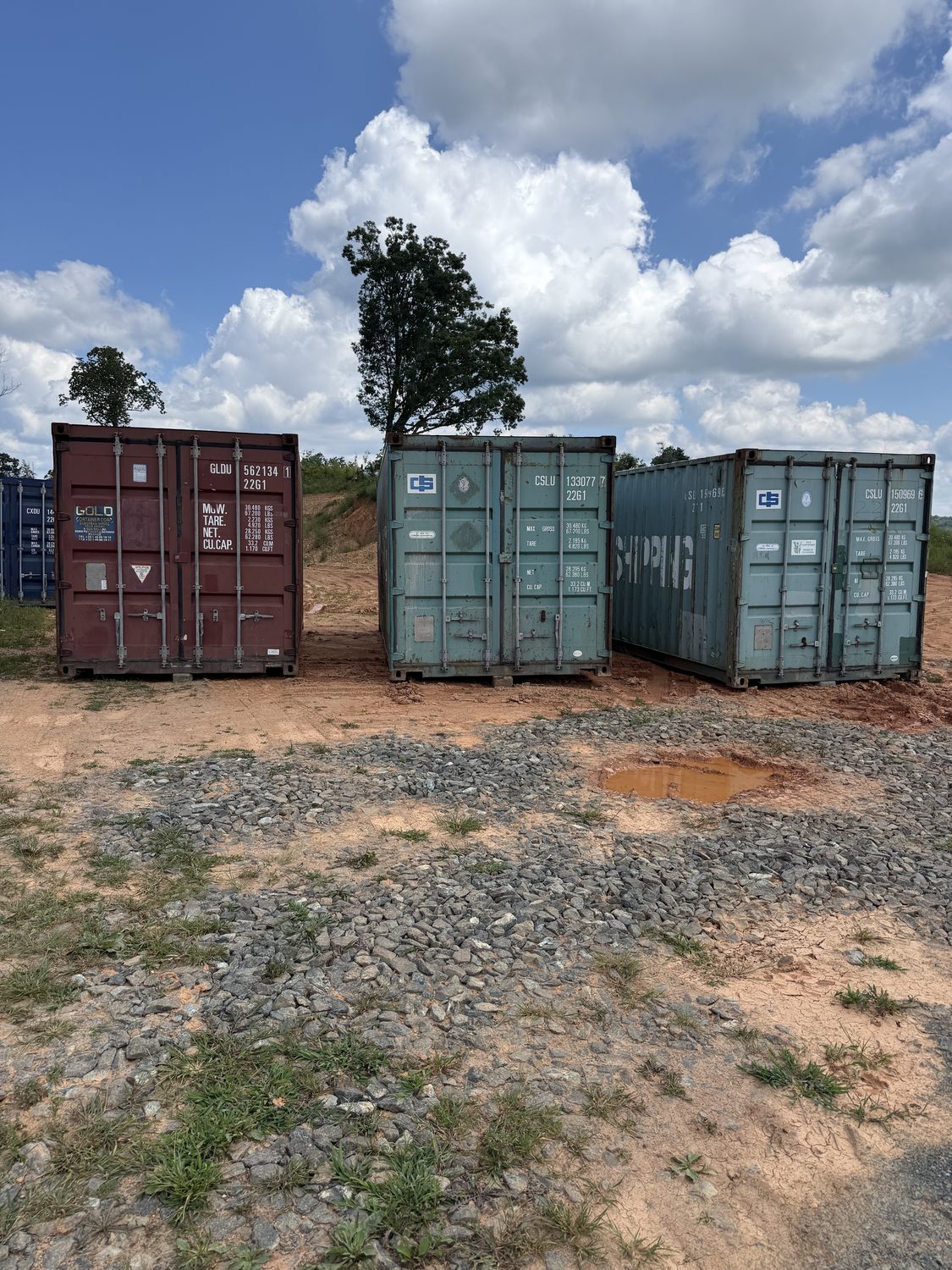
West Jefferson is the largest town in Ashe County, about 55 road miles from our Woodlawn yard by way of Sparta. Buy or rent a 20-ft or 40-ft container and we bring it up the mountain and set it level, delivery included.
West Jefferson is about 55 road miles from our yard at 5567 Elk Horn Rd in Woodlawn. The truck heads down to Sparta, which we publish at about 32 miles, and carries on from there into Ashe County. Free delivery covers 75 road miles measured off the yard, so West Jefferson has room to spare inside that line and the mileage adds nothing to your number.
Worth clearing up before anything else, because the two names get mixed together constantly. West Jefferson and Jefferson are separate towns about a mile apart. Jefferson holds the county seat. West Jefferson is the bigger of the pair and the largest town in Ashe County, which is why most people looking for a container up here type this name into the search box. We deliver free to both, and to the rest of the county, on the same run.
We sell and rent 20-ft and 40-ft ISO containers, and our shop in Woodlawn cuts vents, roll-up doors, windows and shelving into them. The steel is standing on our own gravel, not sitting in a photo on somebody's listing page. That is most of the difference between us and what a container search usually turns up around here, which is a broker who has never laid a hand on the box he is selling you.
Ashe County is Christmas tree country, and West Jefferson sits in the middle of it. Fraser fir does well at this elevation, the county is known for its tree farms, and that shapes what people up here want a container for. A tree operation does not spread its work evenly across the calendar. It spends most of the year tending a crop, then compresses cutting, baling, loading and hauling into a few hard weeks.
That rhythm is rough on storage. Everything the crew needs in late autumn has to sit somewhere from January onward, dry and locked and out of the way: netting and baling supplies, twine, stakes and tags, hand tools, pallets, spare parts for whatever broke last season. Then it all has to come back out in a hurry when the season turns.
A container handles that better than most sheds, for reasons that have nothing to do with how it looks:
None of that is particular to trees. The same box does the same work for a cattle and hay operation, for the trades working across the county, and for anybody whose outbuilding filled up years ago. Our farm and agriculture page covers how people lay them out.
Cold on its own does not hurt a shipping container. Weathering steel does not care about a hard freeze and neither does a marine-grade plywood floor. What you plan for at this elevation is water, and it usually arrives from the inside rather than through the roof.
The mechanism is simple enough. A sealed box keeps whatever air was in it when you shut the doors, plus whatever moisture rode in on the cardboard, the firewood, the equipment somebody rinsed off the week before. On a bright winter day the steel takes the sun and the air inside warms up. After dark it gives that heat straight back, drops below freezing, and the moisture leaves the air for the coldest surface it can find, which is the ceiling. By morning it is back down on your things. A season of freezes and thaws leaves rust freckling overhead and a musty smell in anything soft.
The fixes are cheap and nearly all of them happen before the doors close. Load dry. Keep boxes and bags off the deck on pallets. Drop a desiccant bucket in for a sealed winter layover. Add a pair of louvered vents if the box stays loaded through the cold months, so the air inside can track the air outside instead of getting trapped against cooling steel. Our guide to container condensation works through the list, and it is straight with you that the spring and autumn swings are the worst of the year. Winter up here runs its own version.
Two habits worth keeping. Door seals stiffen in the cold and handles get stubborn on a frozen morning, so give them time rather than a hammer. And walk out after the first real thaw. Five minutes with a flashlight tells you whether you got the airflow right while it is still cheap to fix.
Room is rarely the problem around West Jefferson. A tilt-bed truck wants roughly 65 ft of straight clearance for a 20-ft container and about 95 ft for a 40-ft, plus space to back in, and most places we set a container up here have the open ground for it. Along a farm lane or a field edge, that part takes care of itself.
The ground is the hard part, and the high country hands you a longer soft season than the valleys get. Frost comes out of this dirt slowly. A pasture that carried a tractor fine in October can be a poor idea in March, and the truck is heavier and cannot pick its own line through the soft spots. So we ask about the ground before we commit to a date, and after a thaw or a wet stretch we may ask to push it a few days. Not because the box will not go in. Because a loaded tilt-bed that sinks leaves a mess someone has to repair.
What the driver needs, in rough order of what actually stops jobs:
If the box is staying put, put a few inches of gravel down before it lands rather than after. A crowned pad sends water away and keeps air moving under the floor, which is what keeps the inside dry through a wet spring. Our container foundation guide covers what to build. Not sure your drive will take the truck? Call (276) 237-6144, or send a photo of the approach.
A used cargo-worthy 20-ft is from $3,200 delivered. A used 40-ft is from around $4,900, also delivered. Because West Jefferson sits inside the free zone, those are whole numbers, with the haul, the leveling and a welded lockbox already in them and no mountain surcharge added afterwards. A cleaner one-trip unit costs more, and we quote that on the phone.
Renting starts at $165 a month for a 20-ft and $235 a month for a 40-ft, month to month, nothing holding you past the day you are done. Rent when the need has a date on it: a build, a barn job, one season. Buy when it does not. The arithmetic crosses over somewhere around 18 to 20 months of rent, so a box going in the corner of a field to stay is usually cheaper bought outright.
Before you settle on a spot, call Ashe County. You are in North Carolina, so the Virginia exemption for storage-use containers is not your rule. In this state an accessory building over 12 ft in any dimension generally needs a permit, and that takes in a 20-ft and a 40-ft alike. We will not publish the county's fee or timeline here, because anyone who hands you those without you making the call is guessing. Ask about zoning, setbacks and how long the box may stay, and say up front if you want power run to it.
We do not publish a stock list either. What is standing on the yard turns over week to week, and a stale list is worse than none. Call and we will tell you what we have got and what shape it is in.
Ring (276) 237-6144 or email [email protected] with the size, the condition you want and where it is going, and the quote comes back the same day. Somebody is at the yard Monday to Friday, 8 to 5. Rather put your hands on the steel first? The yard is at 5567 Elk Horn Rd in Woodlawn, with a second sales lot on E Lee Highway in Wytheville.
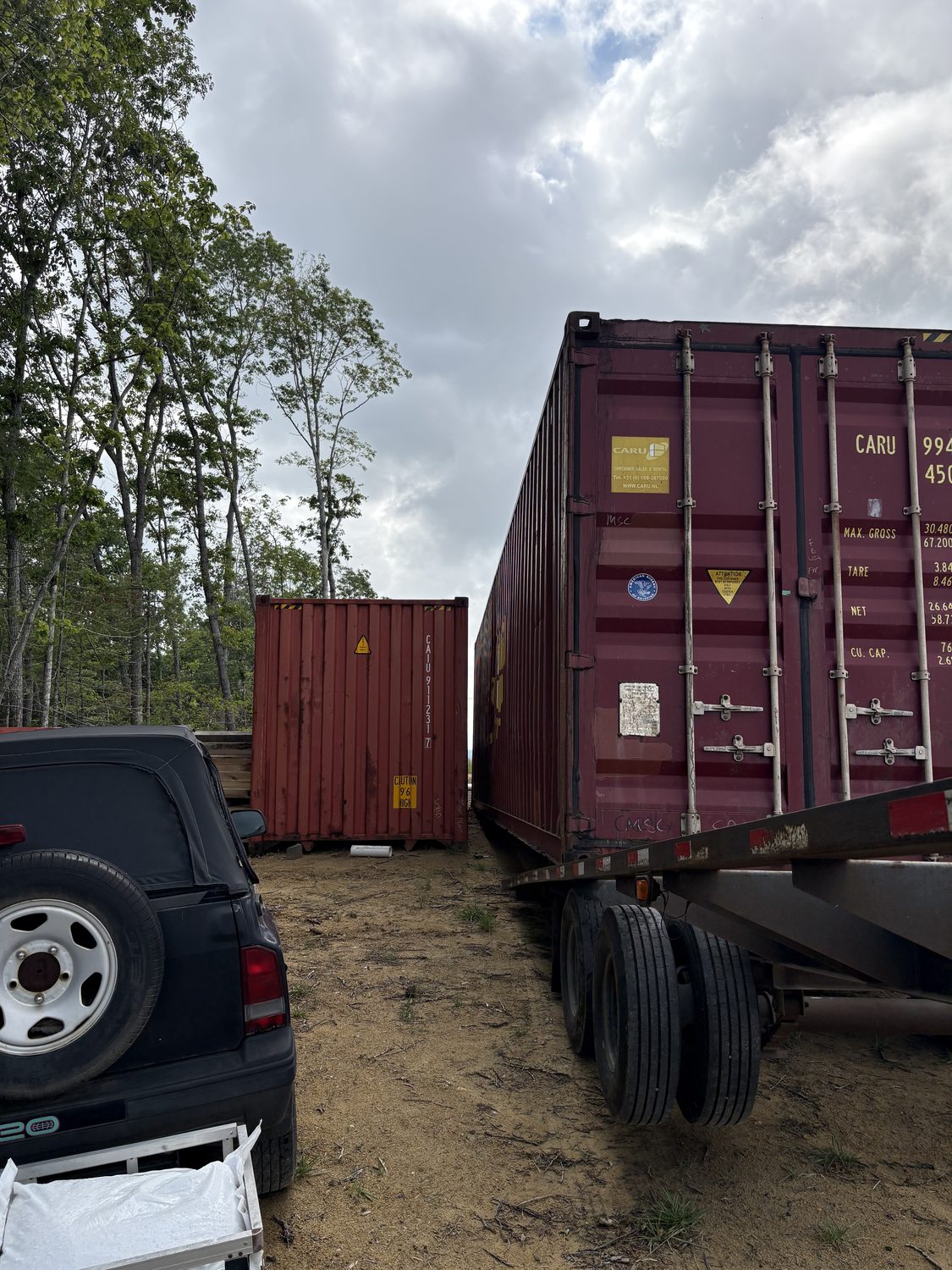
Free delivery covers the whole county and keeps going well past it. A few of the places that sit close to West Jefferson on the same run.
Sparta, NC · Independence, VA · Jefferson · Lansing · Todd · Glendale Springs
Not on the list? You're probably still in range — see the full service area or just call us and we'll check the mileage for you.
Free delivery into Ashe County, a quote back the same day, and a yard with real steel on it 55 miles down the road. Tell us the size and the spot.
Same-day reply. We'll send a real number, a real delivery window, and any photos we need to confirm fit.
You'll hear back from us today (or first thing tomorrow if it's late). For anything urgent, call (276) 237-6144.